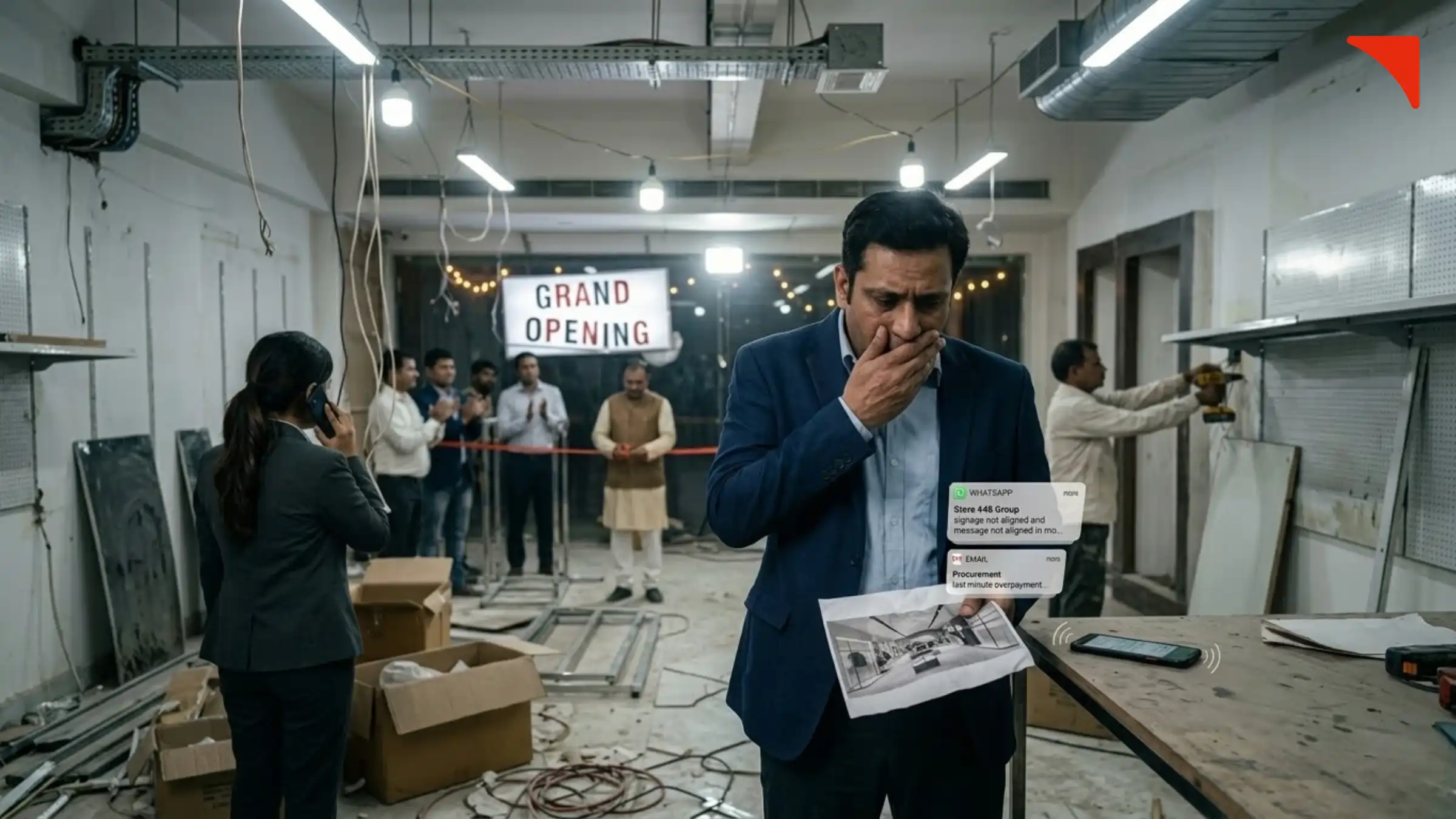
As you cut the ribbon on your 50th store:
People clap, LinkedIn floods with polished photos and praise, the board beams with satisfaction—and you announce: “15 new locations in 90 days. Target achieved!
But the real story isn’t in the photos.
You notice your phone buzzing in your pocket.
There is a message in the WhatsApp group for Store #48: The signage isn’t aligned.
Then there’s another email from the procurement team, stating: last minute local contractor hiring led to 18% overpayment.
And then a sudden realization hits you: On one hand, the flagship store in Delhi feels like a premium brand, whereas the new outlet in Tier-2 looks like a cheap imitation.
Welcome to the Expansion Trap.
This is indeed the riskiest stage for a retail brand: the phase where speed feels like progress, even when it isn’t!
The Illusion of Speed
When directed to ‘capture the market share’ by the management, the junior teams automatically start moving fast. Anyone who can hold a hammer across five different states becomes the first choice of the procurement team.
But here is a painful truth about fast growth: If you do not have a strong foundation, scaling fast does not grow your success. Instead, it leads to a growth in inefficiencies.
There is a huge difference between scaling fast and scaling right.
Growing fast actually looks like managing 35 different local vendors on 35 different Excel sheets. It depends on last-minute fixes, weekend site visits, and pure hustle just to open stores.
Scaling right, on the other hand, runs on a system. It may look boring at first, but it's beautifully balanced and predictable.
So how do successful brands avoid this deadly expansion trap? Well, the answer is simple and clear: Instead of focusing on ribbon cutting, they start focusing on and fixing the machinery behind it.
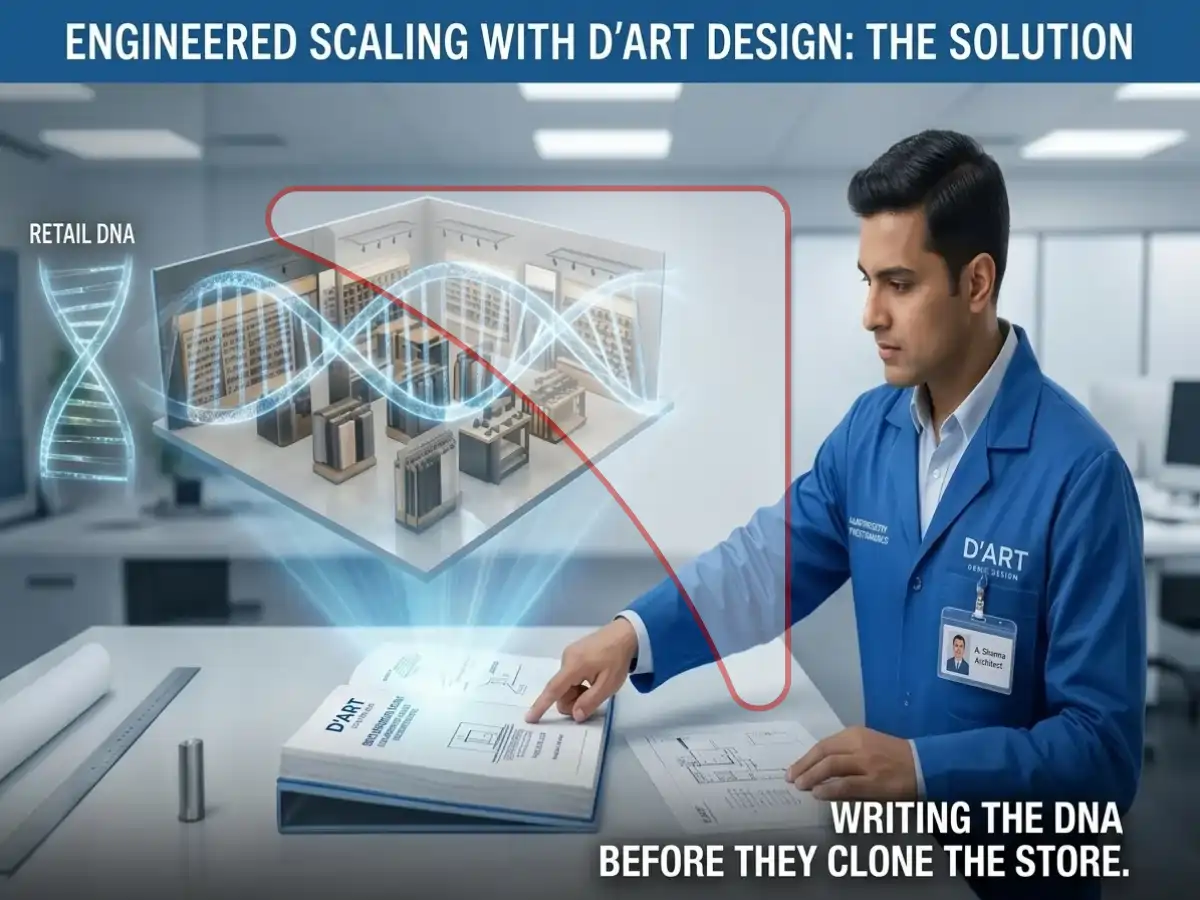
1. They Write the DNA Before They Clone the Store
Scaling is not something that works on instinct.
Many retail brands often depend on a ‘sense’ or a rough 3D render to guide their local contractors. That’s exactly where things start getting wrong: lighting feels off, the fixtures are an inch too wide or small, and customers feel disconnected when they enter the store.
In order to scale right, brands require a highly engineered Retail Design Manual. It doesn’t just act like a brand guideline, but a manufacturing blueprint.
From the steel thickness in fixtures to the exact brightness of lights, it properly locks in every detail. When brands ensure that their retail manual is engineered correctly, it directly eliminates the scope of guesswork.
They no longer need to rely on people to ‘get it right’ as they can mathematically guarantee it.
2. They Fire Their Vendors (And Hire a Partner)
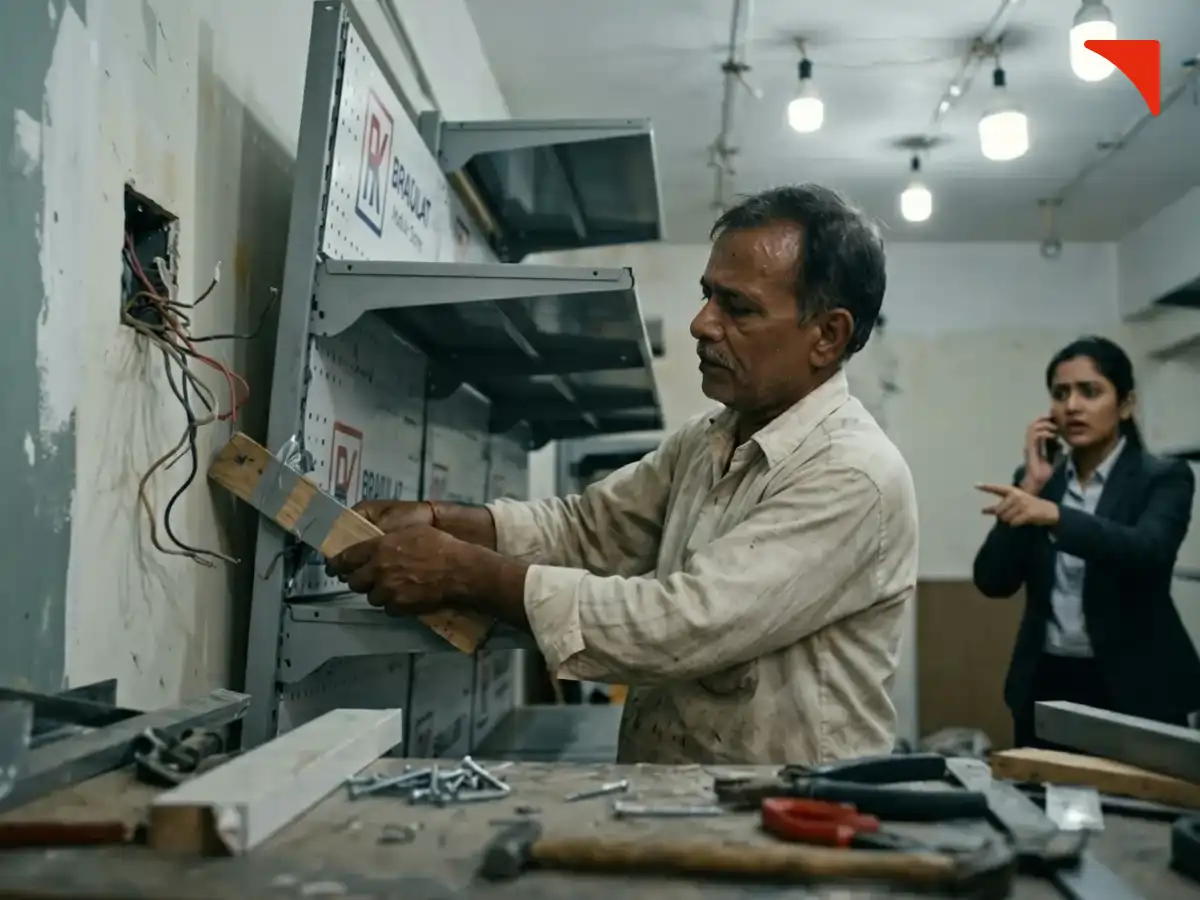
There is one common misconception: hiring local vendors for different locations saves money. In reality, it leaks money through small delays, uneven materials, and no real accountability.
No doubt, vendors do their job. They build shelves, install signs, paint the store, etc. However, they do not care about your 90-day launch plan. What customers experience and feel when they enter your store is not their concern.
When brands scale right, they follow a consolidated and simplified approach. Instead of juggling multiple vendors, they work with a centralized execution partner, further experiencing:
3. They Execute in the “Age of Intelligence”
Why are brands managing multi-crore retail expansions the same way we did in 2010?
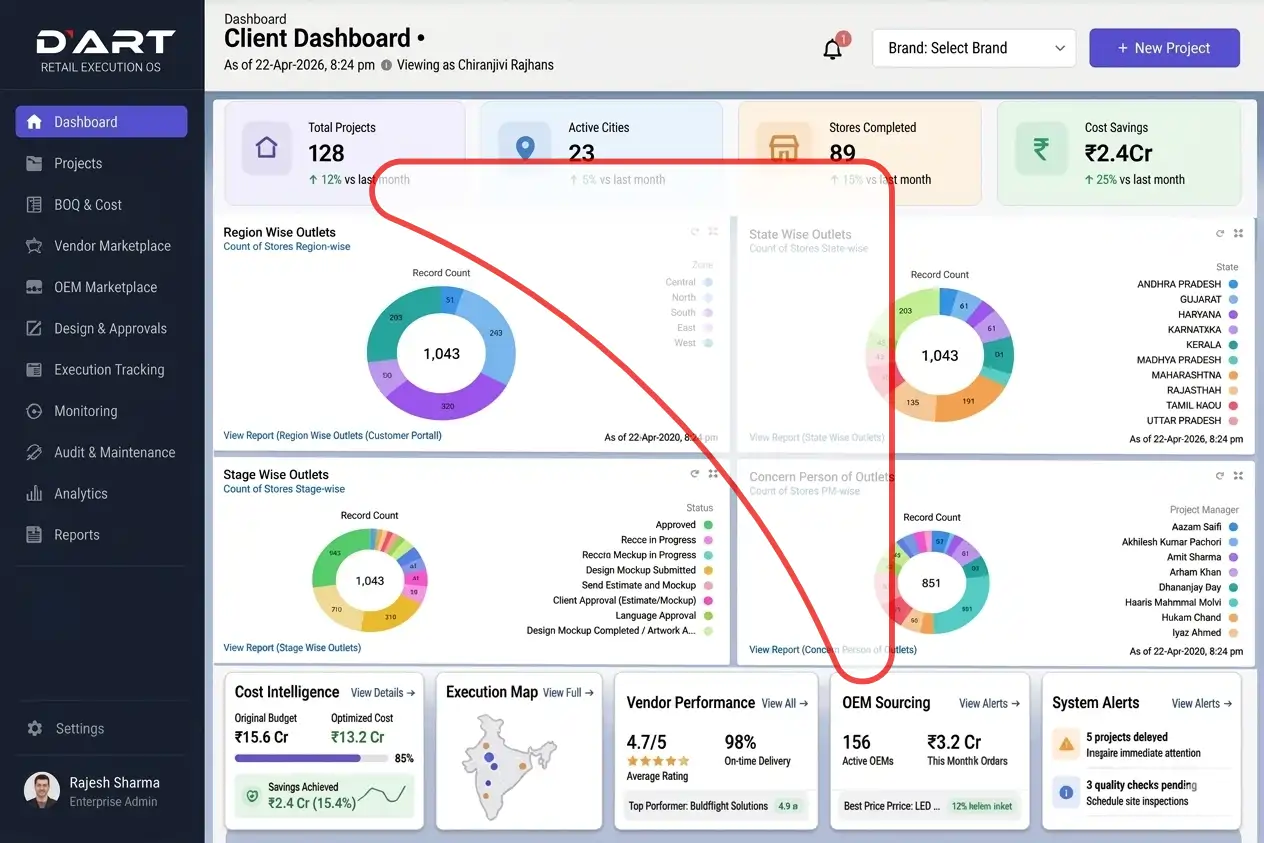
Brands cannot manage a pan-India rollout on a group chat! If they wish to scale without chaos, they need to do one thing differently: Digitize their execution!
They track BoQs (bill of quantities), monitor site progress in real time without traveling miles, and spot and prevent delays before they start impacting store launches.
Brands that scale right do not treat store launches like scattered construction projects. Instead, they treat store execution as a system that runs with data and not guesswork.
The Real Metric of Success
Scaling fast is often driven by ego. Any brand that has enough capital can easily establish a retail presence across 50 new locations within a quarter. But it's scaling right that truly matters. It is driven by profitability, consistency, and control, and ensures that those 50 stores are launched without design inconsistencies, with clear and predictable costs, and within desired timelines.
The next time you look at the map and plan your next 100 locations, take a moment to ask yourself: Are we building a system that truly supports growth, or are we just relying on our team to move faster every time?
If you also wish to join the list of successful brands that scale right, feel free to connect with D’Art Private Limited. As an integrated retail solutions provider, we go beyond designing beautiful and functional spaces and focus on building systems that enable consistent scaling without compromise.