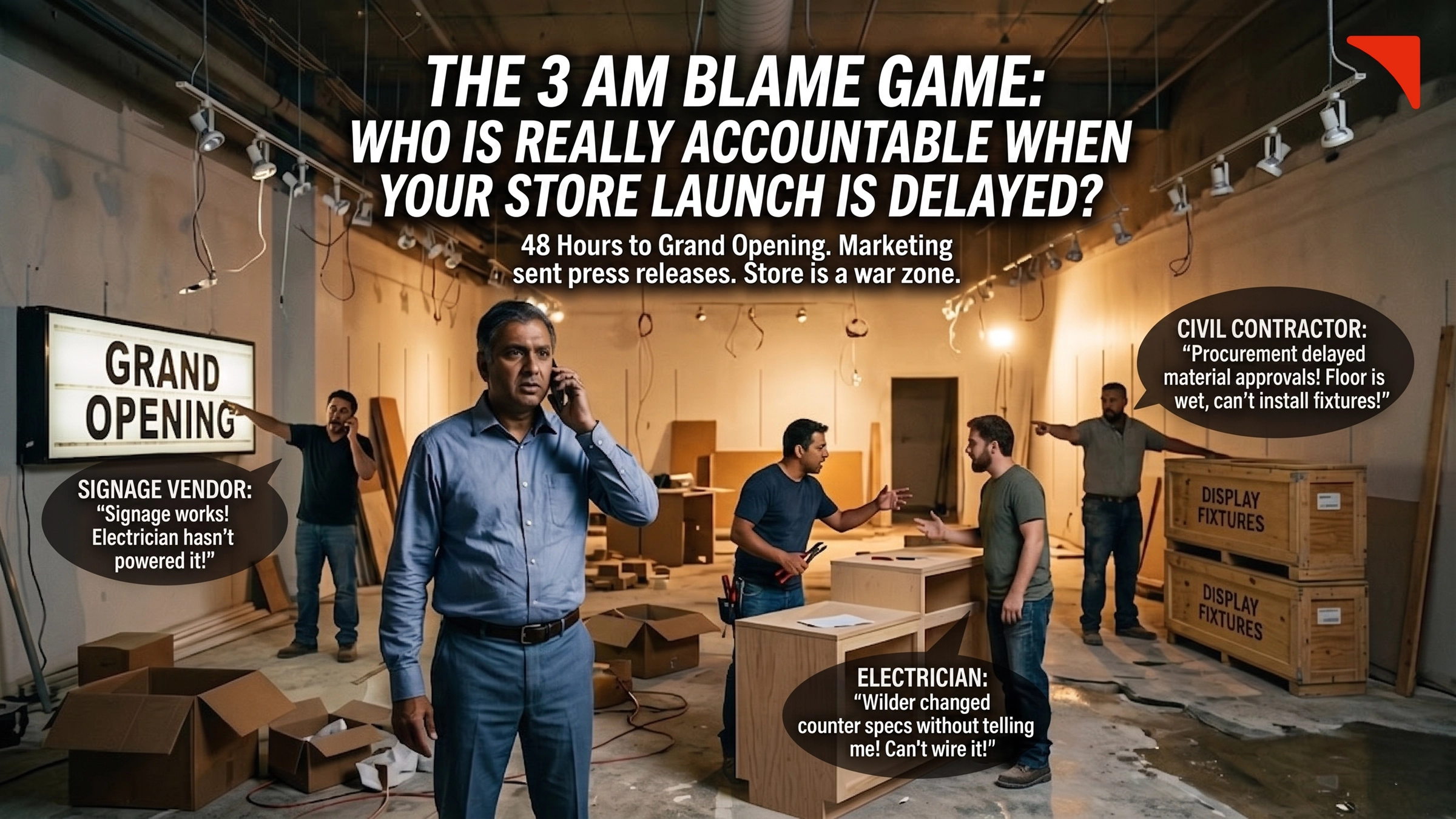
The grand opening is scheduled after 48 hours. The marketing team has already sent out the press releases. The regional director is flying in tomorrow.
But on the ground? The store is a war zone.
The primary backlit signage is not working. The flooring is not ready, due to which the display fixtures are sitting in the wooden crates. The electrician is refusing to wire the main counter, blaming that other workers have changed the dimensions without informing him.
You pull out your phone and dial the site supervisor. And so begins the most exhausting ritual in retail expansion: The Blame Game.
The signage vendor blames the electrician. The electrician blames the civil contractor. The civil contractor blames the procurement team for delayed material approvals.
Everyone is ready with a perfectly valid reason why the work wasn’t done. Everyone has a WhatsApp screenshot proving it "wasn't their scope of work."
So when the store launch gets delayed, who is actually responsible?
If you are a brand that’s managing 15 different localised vendors, the uncomfortable truth is that you are caught in the trap of fragmented execution.
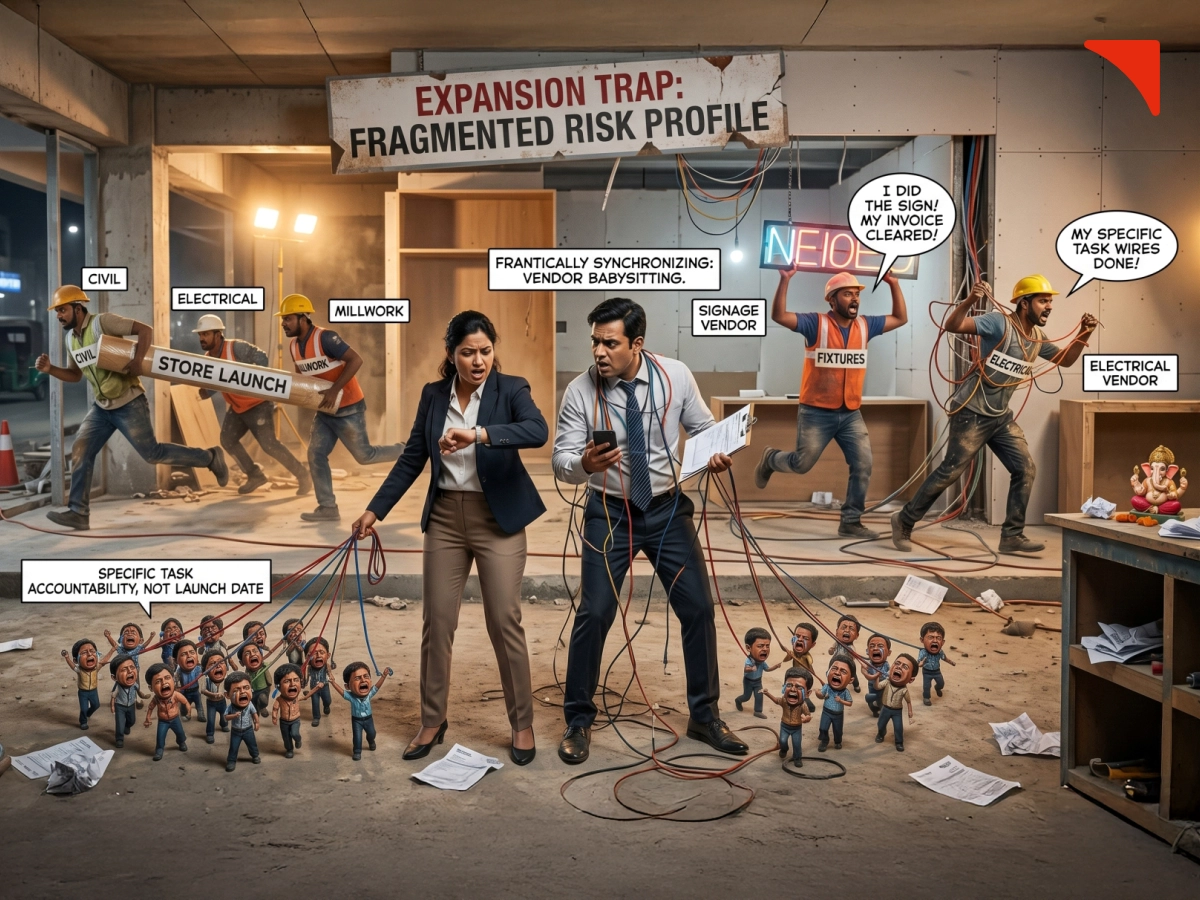
The retail industry is indeed obsessed with treating store rollouts like a chaotic relay race. Brands break their retail projects into tiny, fragmented pieces and then hand them to the lowest bidder in every category. They think that they are practising cost efficiency. However, what they are actually enrolling for is a fragmented risk profile.
When brands hire a vendor, they are buying a specific task. The signage installation company is only responsible for installing the sign. They are not accountable for the launch date. They are not concerned about the store opening on upcoming Tuesday or next month, as long as their invoices are clear.
This respective model forces the retail and procurement heads to become full-time babysitters. They are constantly chasing updates and trying to synchronise vendors who aren’t really working together, as they have no real reason to stay in sync.
Moving from Vendors to Partners
In order to achieve a sustainable retail growth, brands need a fundamental shift: They need partners, not just vendors!
"I installed the shelf; my job is done." This is how vendors usually think. On the other hand, a partner thinks in outcomes. "The store opens on the 15th. We own the entire timeline."
Real accountability cannot exist in a vacuum. Instead, it has to be engineered into the very DNA of the retail rollout strategy. This is exactly why most successful retail brands are ditching localised, multi-vendor models and further moving towards integrated, system-driven execution.
Engineering Accountability: The D’Art Approach
Accountability is not about someone to blame when things go wrong. Instead, true accountability is about building a system where things do not go wrong in the first place. At D’Art, this comes down to three different shifts.
The Real Cost of a Delay
Delaying the store launch does not just count as an operational issue. It bleeds revenue. Rent keeps running. Marketing spends go to waste. Also, it negatively hits your brand reputation in a new market.
So the next time you review a multi-crore store rollout budget, look past the numbers and ask yourself: Are we just paying for materials and labour, or are we investing in accountability?
Because when you engineer retail rollouts systematically, you stop chasing excuses. You get to cut the ribbon on time. Every single time.