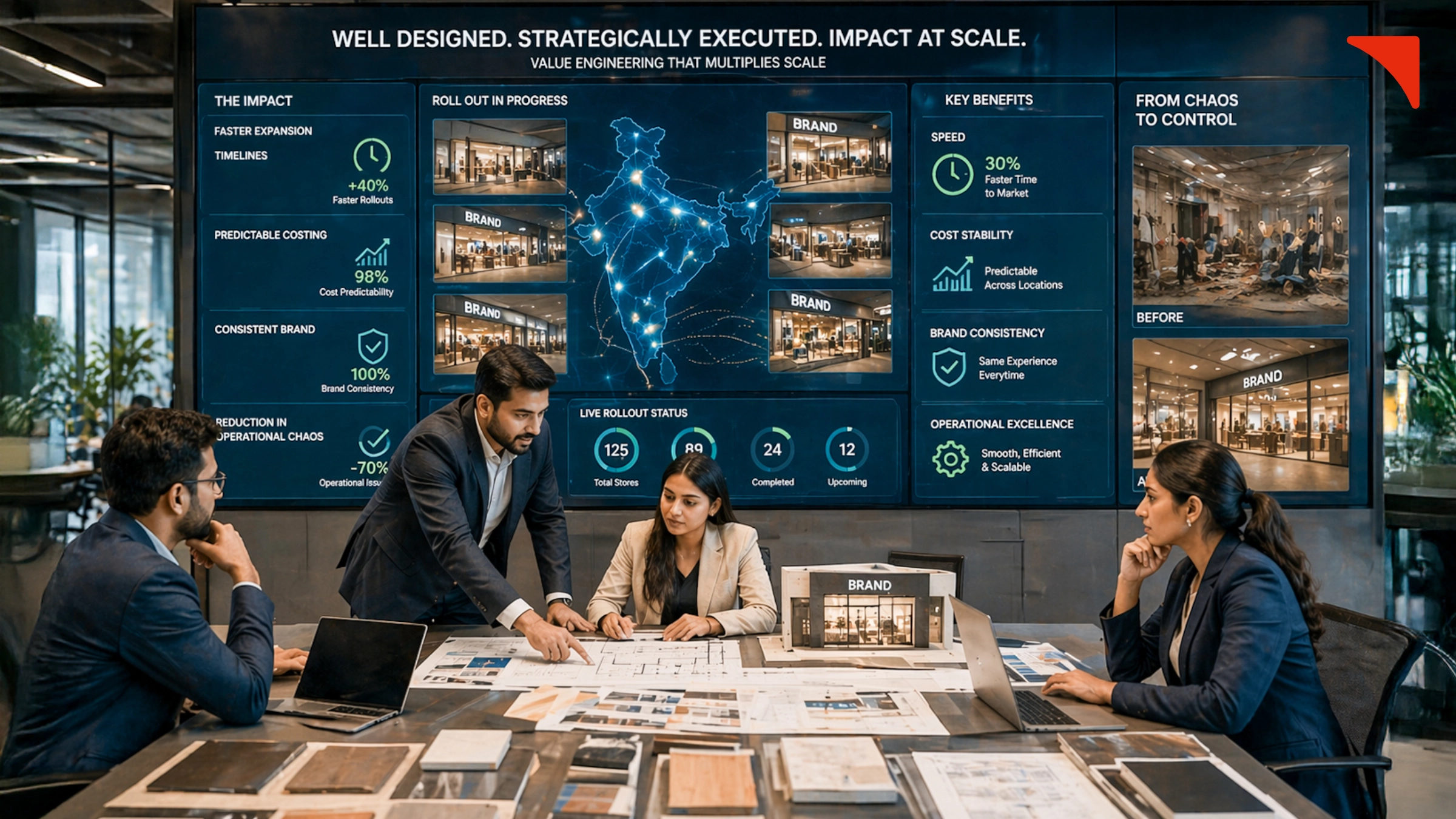
In this highly competitive era of retail, expansion today is not just a question of design or execution. Instead, it is more about how intelligently a brand can scale.
As brands decide to open hundreds of stores across different geographies, the traditional rollout approach no longer holds relevance. Costs don’t just rise, but escalate unpredictably. Timelines stretch. Vendor dependencies multiply. And most importantly, the hallmark of a strong retail identity, consistency, starts to erode. This is exactly where the concept of value engineering (VE) enters the play. However, it is misunderstood in most cases.
Value engineering is commonly noticed as a cost cutting lever, a way that helps in reducing material usage, negotiating better vendor rates, or simplifying fabrication. Even though these outcomes are real, they only scratch the surface.
When applied correctly, value engineering is not just about spending less or reducing costs. Instead, it is actually about maximizing the output of every rupee, every process, and every decision that shapes retail expansion.
The Shift: From Cost Reduction to Rollout Intelligence
In high growth retail environments, “How can we reduce cost per store?” is not the real question. Instead, it evolves into “What are the ways to build more stores, faster, with the same capital, without compromising the brand experience?”
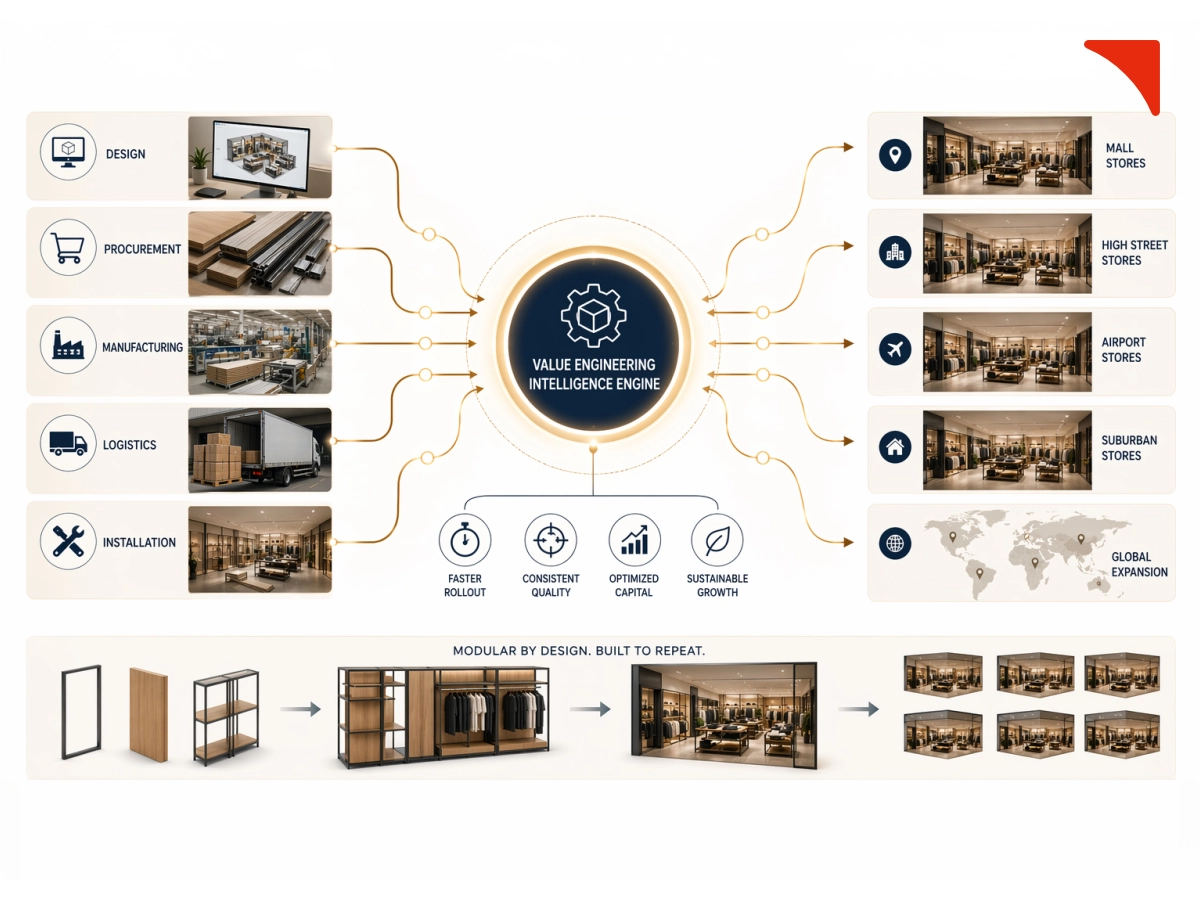
This shift is exactly what changes everything.
Value engineering goes beyond a tactical cost exercise. It acts like a strategic rollout engine that seamlessly integrates design, procurement, manufacturing, and execution into a single, optimized system. Because when scaling a business, inefficiencies do not stay small, and even a five to ten percent gap at the store level results in significant capital leakage across numerous locations.
On the other hand, a well designed and strategically executed rollout system can enable:
In this form, value engineering clearly stops being just about saving money and instead becomes about multiplying scale.
Where Value Engineering Actually Creates Impact
A structured value engineering approach mainly operates across five connected layers of a retail rollout.
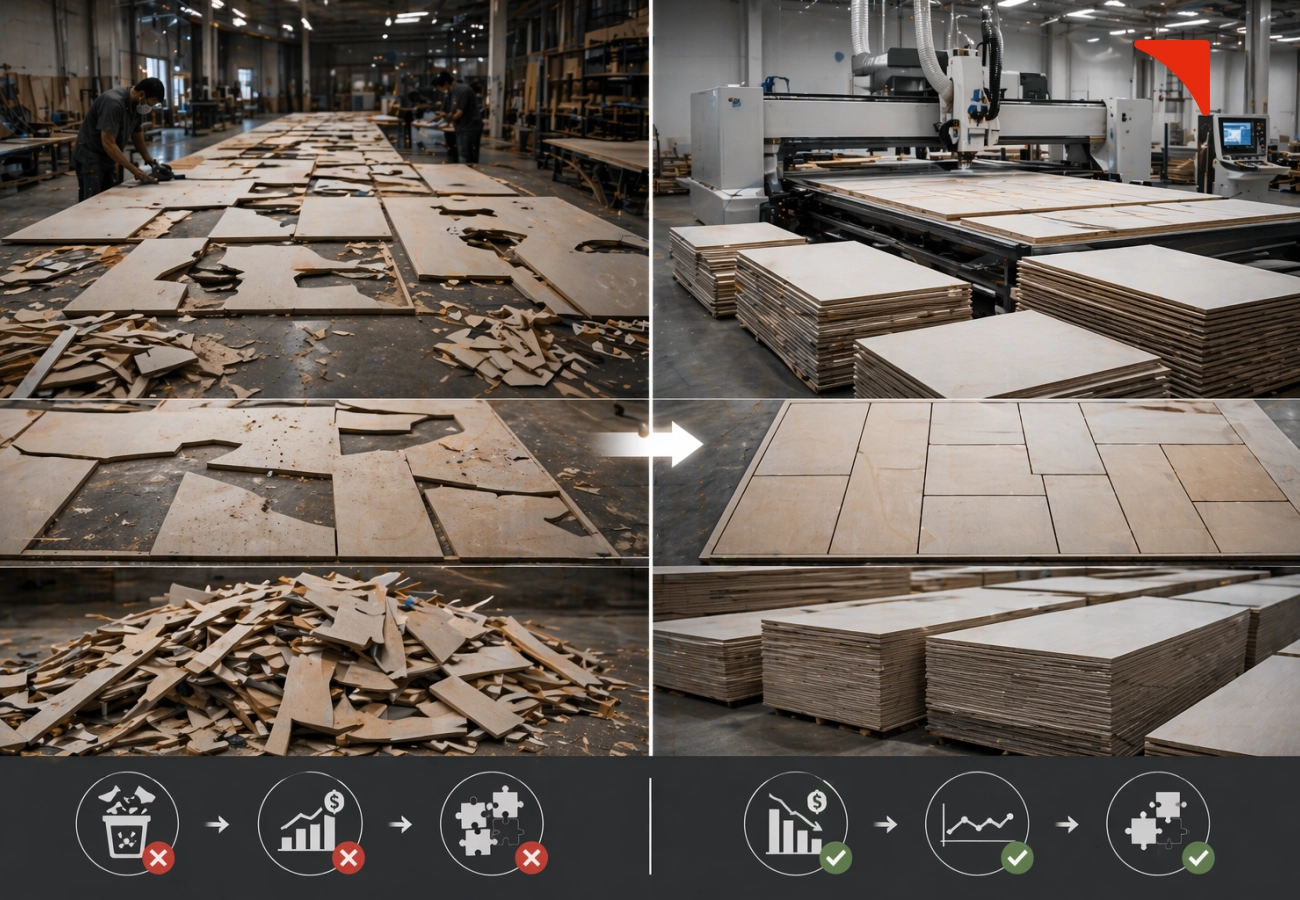
1.) Material Intelligence: Designing for Efficiency, Not Just Aesthetics
Brands often design retail fixtures in a way that looks aesthetically pleasing. As a result, fixtures do not align with standard material formats, further leading to:
However, when brands design fixtures around standard sheet sizes (plywood, MDF, metal) and optimize their store layouts for maximum utilization, they will experience a significant reduction in overall wastage. This will further result in:
2.) Manufacturing Acceleration: Engineering for Speed
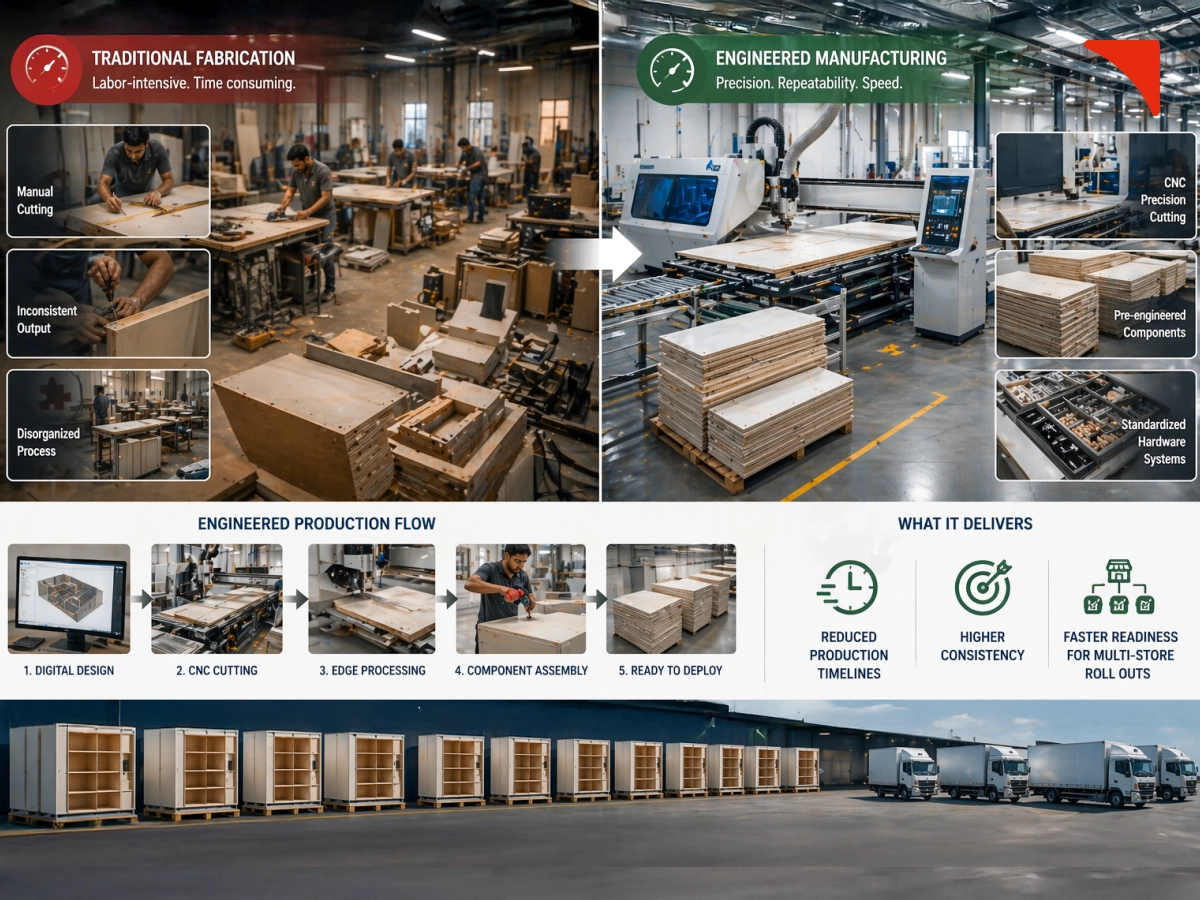
Traditional fabrication methods heavily rely on labor and are very time consuming. This starts becoming a bottleneck in case of increased rollout volumes. Considering this scenario, value engineering introduces:
All these shift fabrication from a manual procedure and convert it into a repeatable manufacturing system. This further results in:
3.) Functional Simplification: Eliminating Redundancy Without Losing Experience
In most of the retail environments, the layers of materials or processes are not added on the basis of necessity but out of habit. Here are a few examples to support this statement:
It is important for brands to understand that the main objective is not to compromise the look and feel. Instead, they should focus on achieving the same visual as well as functional output with fewer inputs. Doing this will further result in
4.) Logistics & Deployment Efficiency: Designing for Movement
Logistics is indeed one of the most overlooked cost centers in retail rollouts. Brands should understand that when they execute bulky, non modular fixtures, it significantly:
On the other hand, value engineering seamlessly solves this through:
This further results in:
5.) Lifecycle Based Investment Planning: Allocating Capital Intelligently
It is a fact that not all retail elements require the same level of investment. Every single element, including permanent fixtures, promotional units, and seasonal displays, serves a unique purpose and has different durations. When brands treat all these elements in a similar manner, this automatically leads to overinvestment.
Value Engineering introduces a lifecycle based approach in cases when
This approach further results in:
Why Value Engineering Becomes Critical at Scale
Inefficiencies might go unnoticed when executing just a single store. However, these small issues become exponentially expensive at a network level.
Brands that are expanding their business and rolling out across dozens or hundreds of locations, value engineering will help them:
In other words, value engineering does not reduce costs. Instead, it actually increases how much retail a brand can build without increasing its capital.
Beyond Cost: Value Engineering as a Rollout System
The real power of value engineering does not lie in isolated optimization. Instead, it actually lies in its ability to function as a connected system. When the respective concept is integrated across all the retail aspects, including strategy, design, procurement, manufacturing, logistics, and execution, it seamlessly transforms fragmented rollout activities into a streamlined and scalable system.
Brands that consider rollouts as individual or separate projects often experience various issues, including vendor inconsistencies, timeline delays, and cost unpredictabilities. On the other hand, the same brands, when adopting a system driven approach, tend to achieve standardization at scale, faster expansion cycles, and greater operational control.
The Competitive Reality
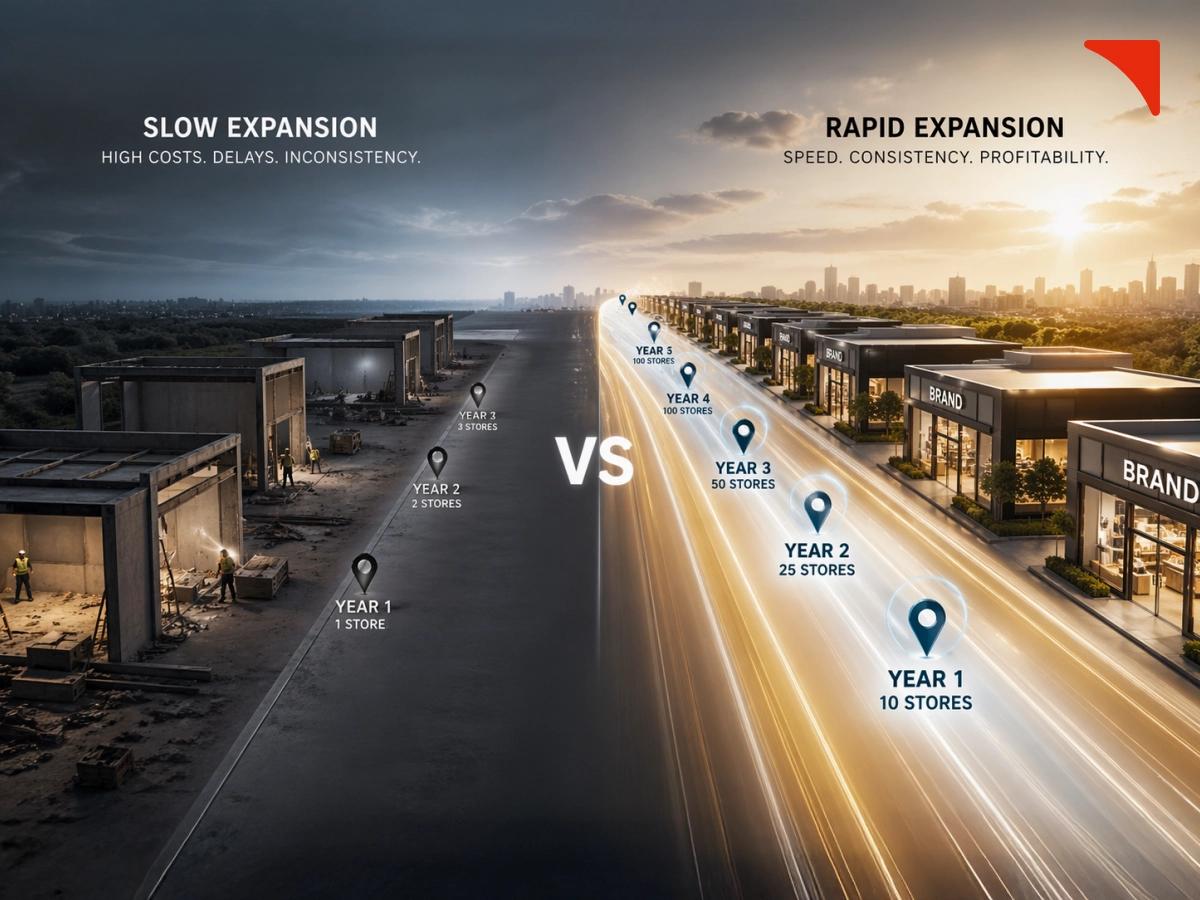
In today’s highly competitive retail environment, the difference between market leaders and non successful brands is not design. Instead, it is how effectively they scale.
Brands that will not take effective measures to systemize their rollout procedure will often end up:
On the other hand, brands that adopt engineered rollout systems:
Winding it up!
When brands see value engineering as a cost cutting tool, they are basically misunderstanding it. However, when the respective concept is applied in an appropriate manner, it automatically gets converted into a strategic enabler of growth. Because after all, it is not about doing less. Instead, it is actually about achieving more, that too, with the same amount of resources.
As the field of retail becomes increasingly competitive and store expansion introduces new challenges, brands that engineer efficiency into every aspect of retail rollout will become the leaders, while the rest might fall behind.