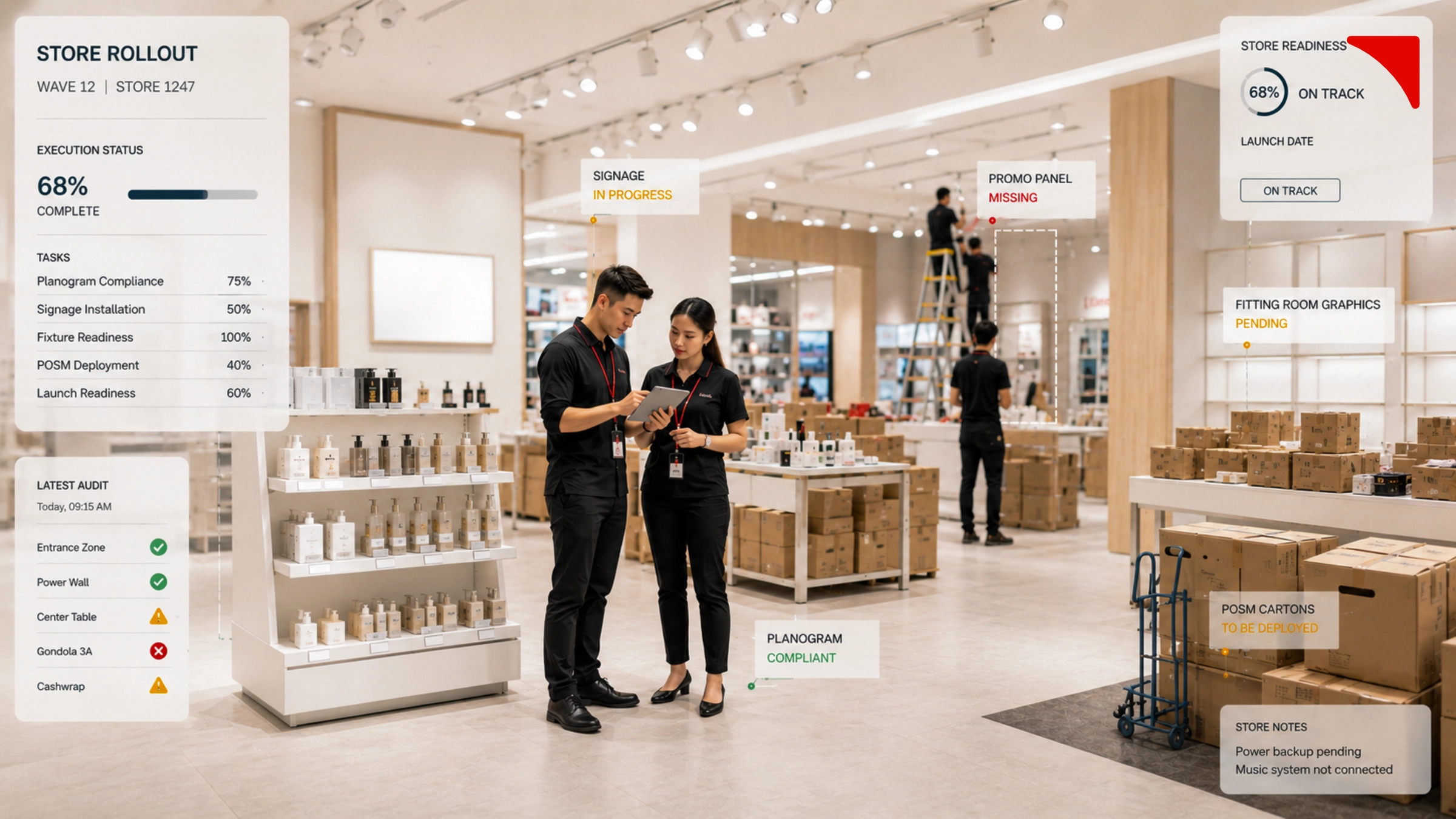
In a race to open 50 stores in 50 days, ribbon-cutting is something that usually acts like a finish line. The marketing managers have done their tasks and generated the buzz. On the other hand, the procurement team has successfully moved mountains of fixtures and inventory. But as soon as the doors open, a silent failure often takes hold: The Visual Compliance Gap.
Even though a store might be physically open, industry data suggests that in the case of rapid retail rollouts, around 40% of in-store marketing materials are either never installed or executed in a correct manner. For a marketing manager, this clearly means that around 50% of the campaign budget is invisible. Similarly, for a procurement head, this indicates that the high end displays they negotiated are currently sitting in a dumpster or backroom.
The Mathematics of Invisibility
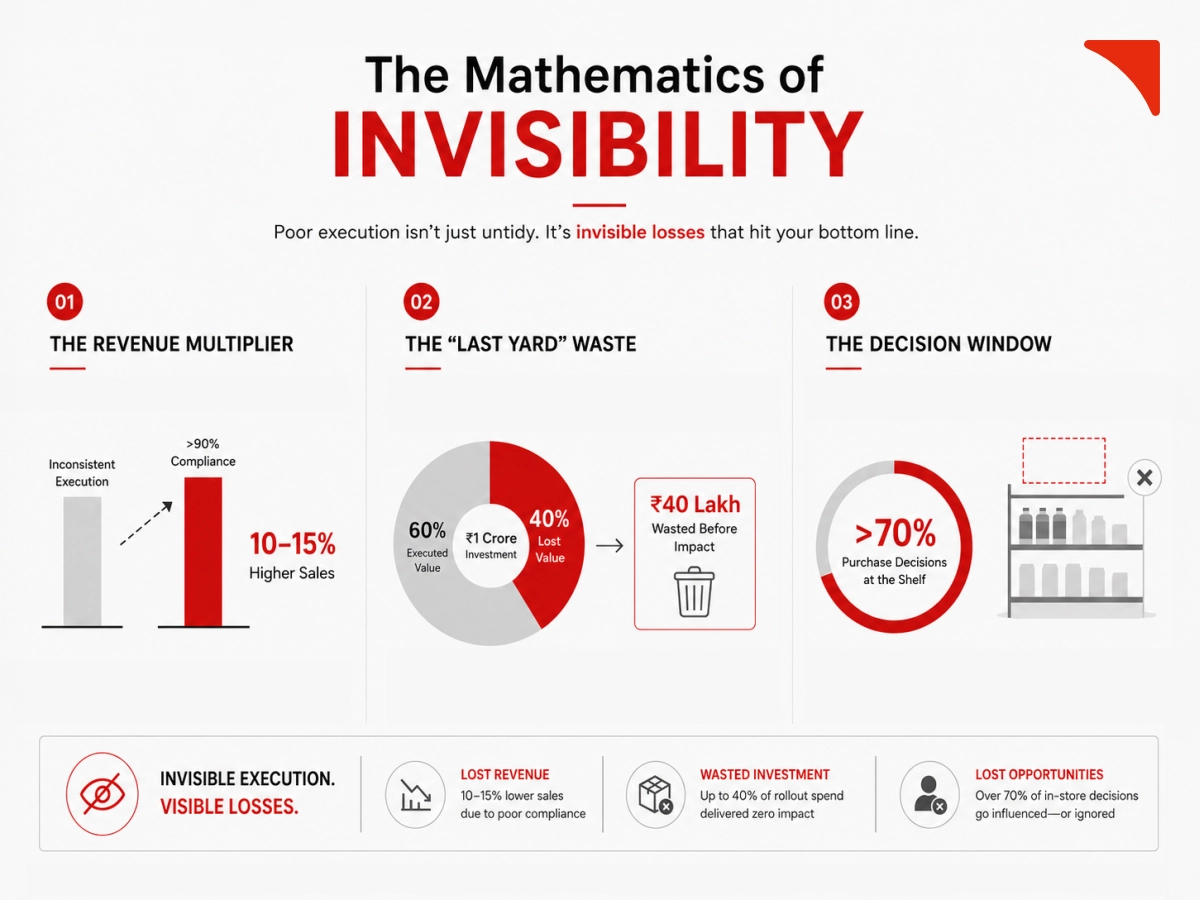
The cost of poor execution isn't just a "cluttered" store. Instead, it is a direct hit to the bottom line. Here are a few 2026 benchmark considerations for high-velocity retail:
The Procurement Pivot: From Unit Cost to "Total Cost of Execution"
The unit cost is indeed the traditional metric of success for a procurement head. However, when we talk about rolling out 50 stores in 50 days, a display that is less expensive but difficult to assemble is actually a very costly liability.
Why "Fast" Usually Means "Failing"
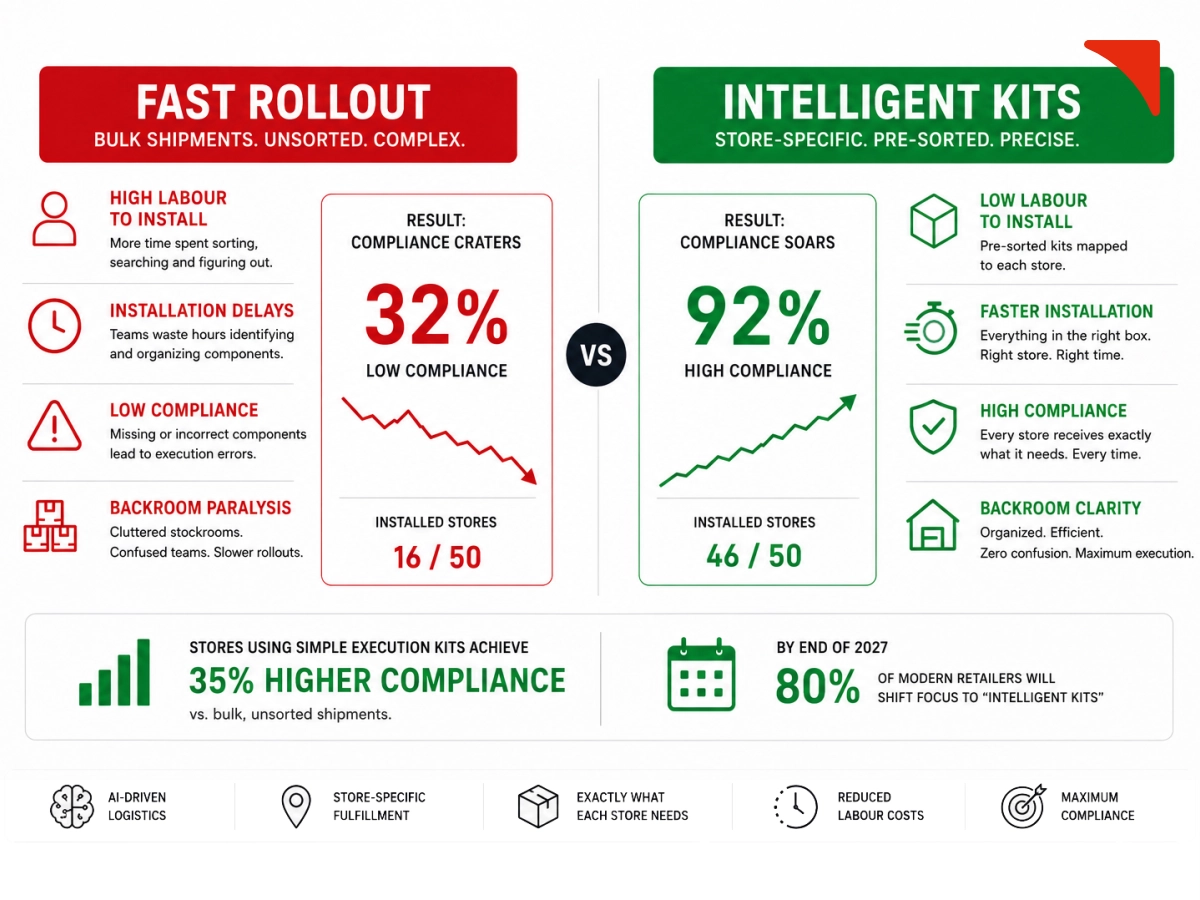
Complexity friction is the primary reason compliance craters during expansion. When you are scaling a business, you aren’t just managing a single store. Instead, you are managing a 50 store "Execution Engine."
The procurement teams usually focus on the unit cost of a display. However, the true cost is the labour to install ratio. It has been noticed that stores that receive "Simple Execution Kits" (pre-sorted displays mapped to specific floor plans) see a 35% higher compliance rate in comparison to those receiving bulk, unsorted shipments.
Various studies suggest that by the end of 2027, modern retailers will shift 80% of their focus toward "Intelligent Kits." They will start utilising AI-driven logistics in order to ensure that every box contains exactly what that specific store needs. This will further help in reducing "backroom paralysis."
Operationalising Accountability: The "Photo-First" Culture
Marketing Managers often struggle with the "out of sight, out of mind" nature of remote store launches. To ensure the compliance gap doesn't swallow your budget, you must institutionalise accountability.
Protecting the "T-Minus" Momentum
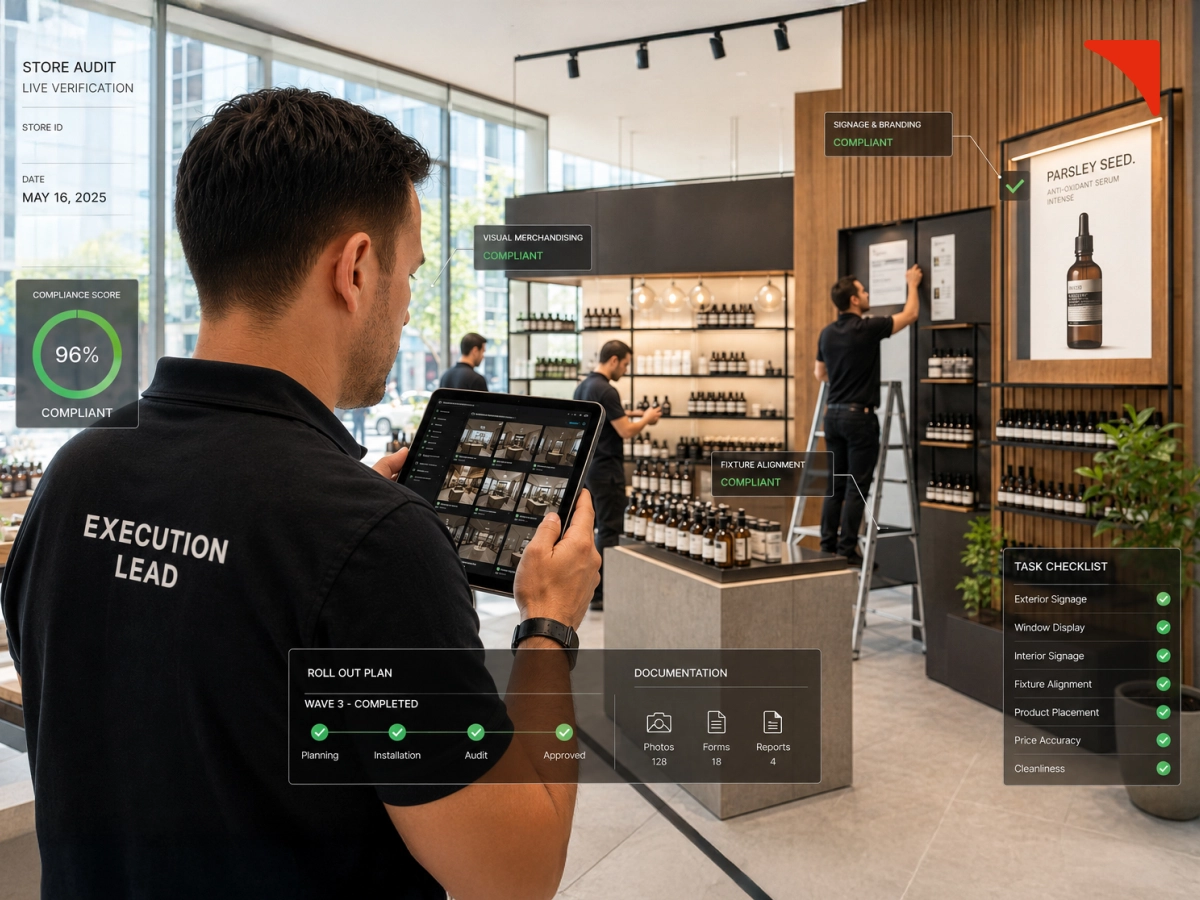
In order to prevent your retail expansion from becoming a series of expensive mistakes, your 72 hour punch list needs to move construction and IT and should instead focus on visual readiness.
Conclusion: Bridging the Execution Gap
The transformation of a construction site into a revenue generating retail environment in indeed the most volatile phase of any execution. Brands often consider scaling fast as a victory. However, they often ignore that without visual compliance, speed is just a vanity metric that masks significant operational waste.
When the marketing and procurement teams align on the ‘final yard’ of store execution, the organisation stops simply opening stores and instead starts launching high-performing assets.
By institutionalising rigorous handover protocols and shifting procurement toward execution-ready sourcing, you protect your capital investment from the "Silent ROI Killer". In the competitive landscape of 2026, the retailers that win aren't just the ones who grow the fastest—they are the ones who ensure that every rupee spent on the brand vision actually reaches the customer's eyes.
Don't let 40% of your budget disappear into the backroom; close the gap, enforce the standards, and ensure your expansion is defined by sustained profitability, not just physical presence.