A long time back, traditional rollout models moved like a relay with too many handoffs. They included various steps like design, approvals, production, dispatch, installation, handover, etc. Each step waits for the previous one to complete, further stretching the timelines to 20-30 days per store. When multiplied by hundreds of outlets, time stops being a metric and instead becomes a bottleneck. This further creates delays, increases the operational costs, and disrupts channel momentum.
But today’s expansion driven retail landscape does not reward those who move carefully, but the ones who move fast–and in parallel.
The real challenge is not about doing this better. Instead, it is actually about building systems that are engineered for speed from the ground up. It is about ensuring that processes don’t queue, but overlap, where scale does not slow you down but accelerates you.
Because when we talk about 1000 stores, execution is not the problem; timely planning is!
For growing brands, designing and building stores is no longer the key focus. Instead, they should be actually concerned about consistently deploying their stores at scale and at the speed that the market demands.
Well, this is exactly where POWER STOCK STRATEGY emerges as a critical enabler.
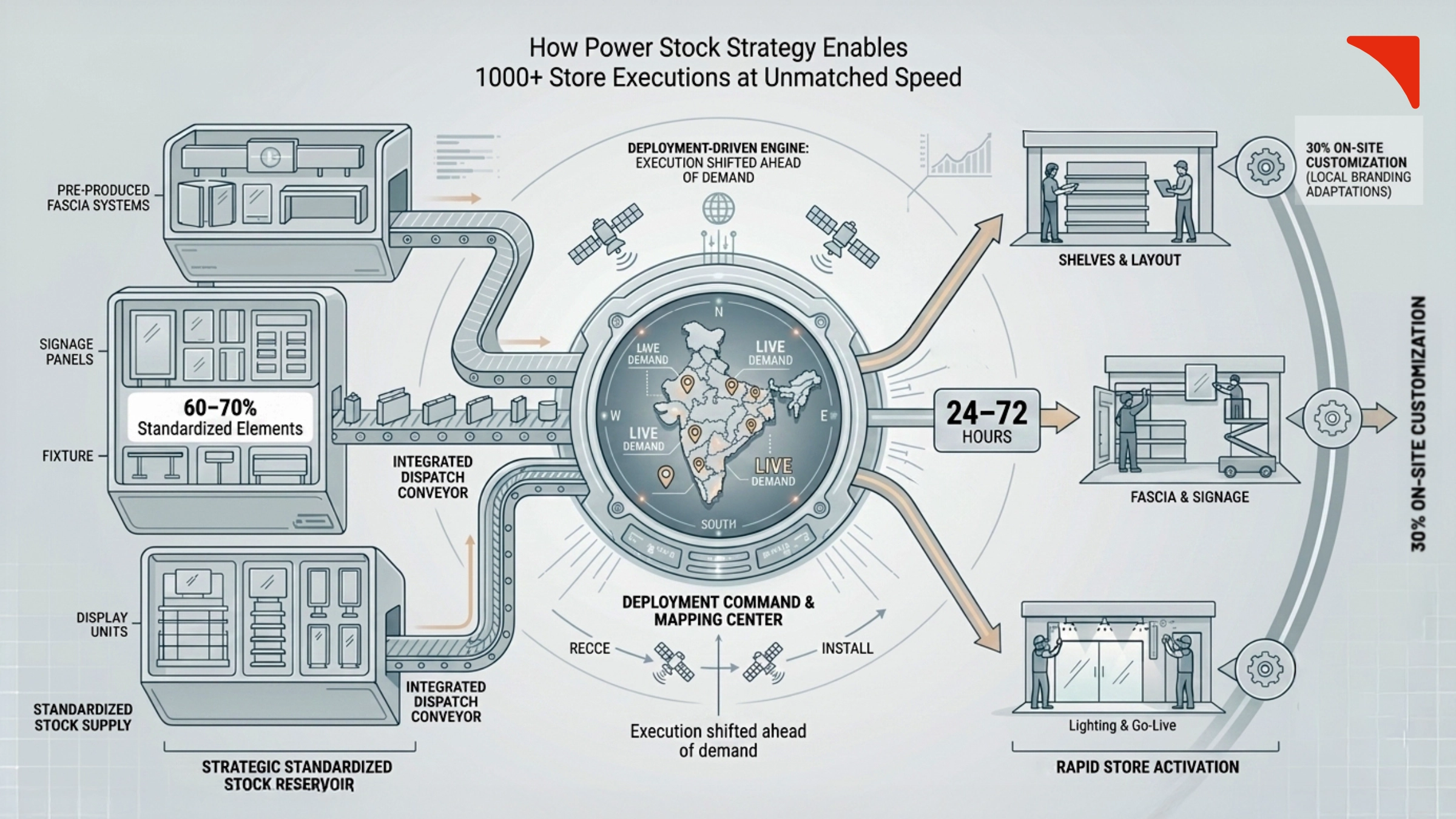
Power stock strategy in retail is a pre-emptive rollout system where most of the store elements are standardized, pre-produced, and regionally stocked.
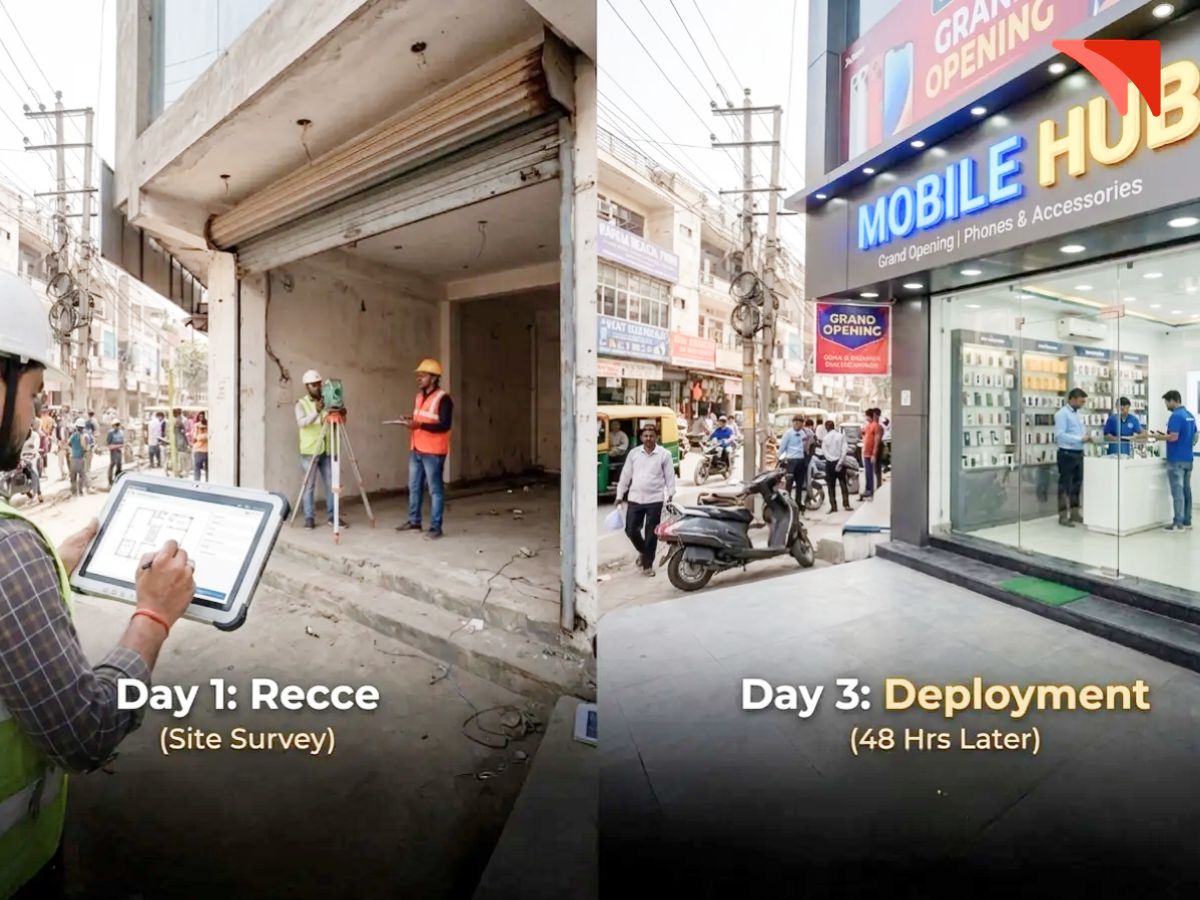
Instead of producing in-store elements after approvals, the power stock strategy shifts execution ahead of demand. It converts rollout from a sequential process into a deployment driven model and allows the stores to go live within 24 to 72 hours after recce.

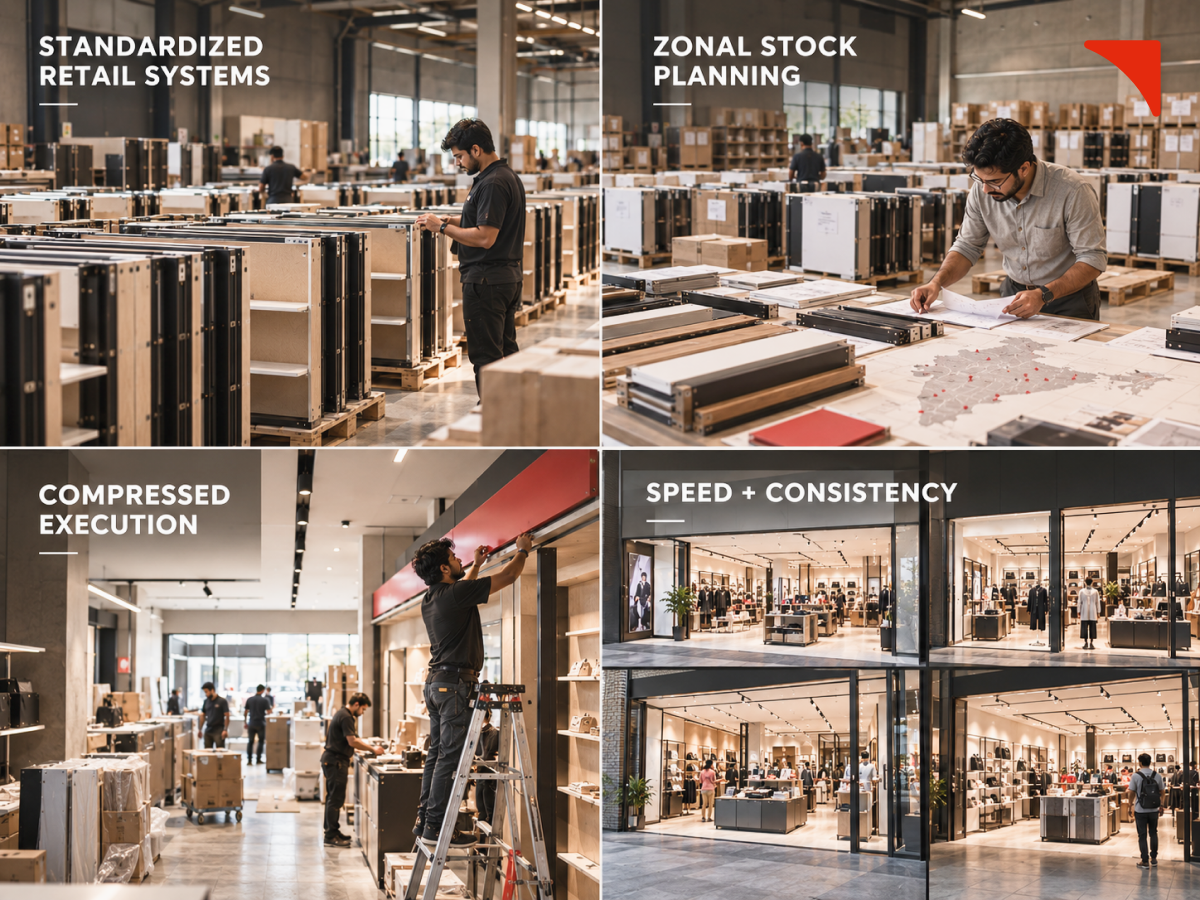
The first rollout phase begins with mapping the entire retail network across different zones, including North, South, East, and West, and aligning store pipelines with expansion velocity. This phase specifically ensures that inventory planning is not driven by assumptions, but by actual rollout demand.
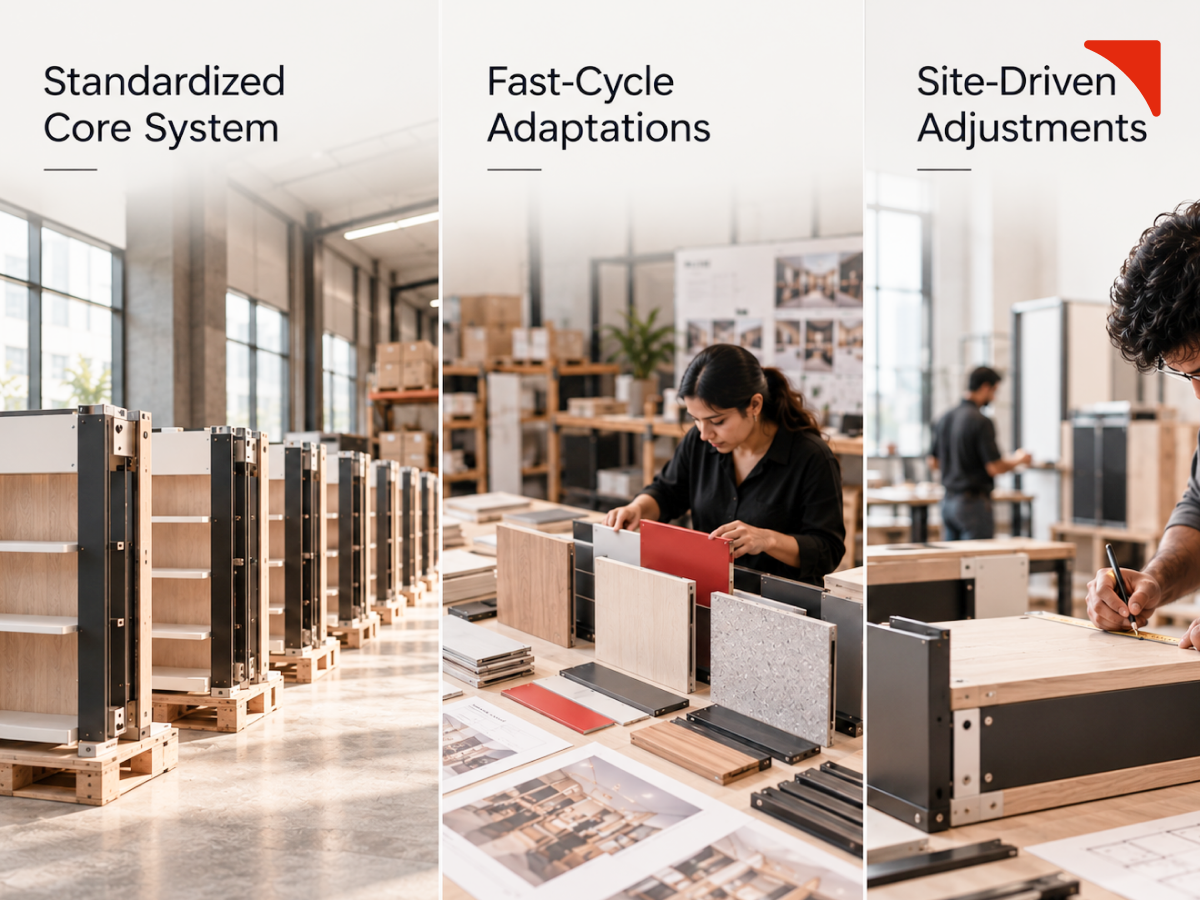
In this phase, stores are broken into:
When the degree of standardization is higher, it significantly shifts execution from creation to deployment.
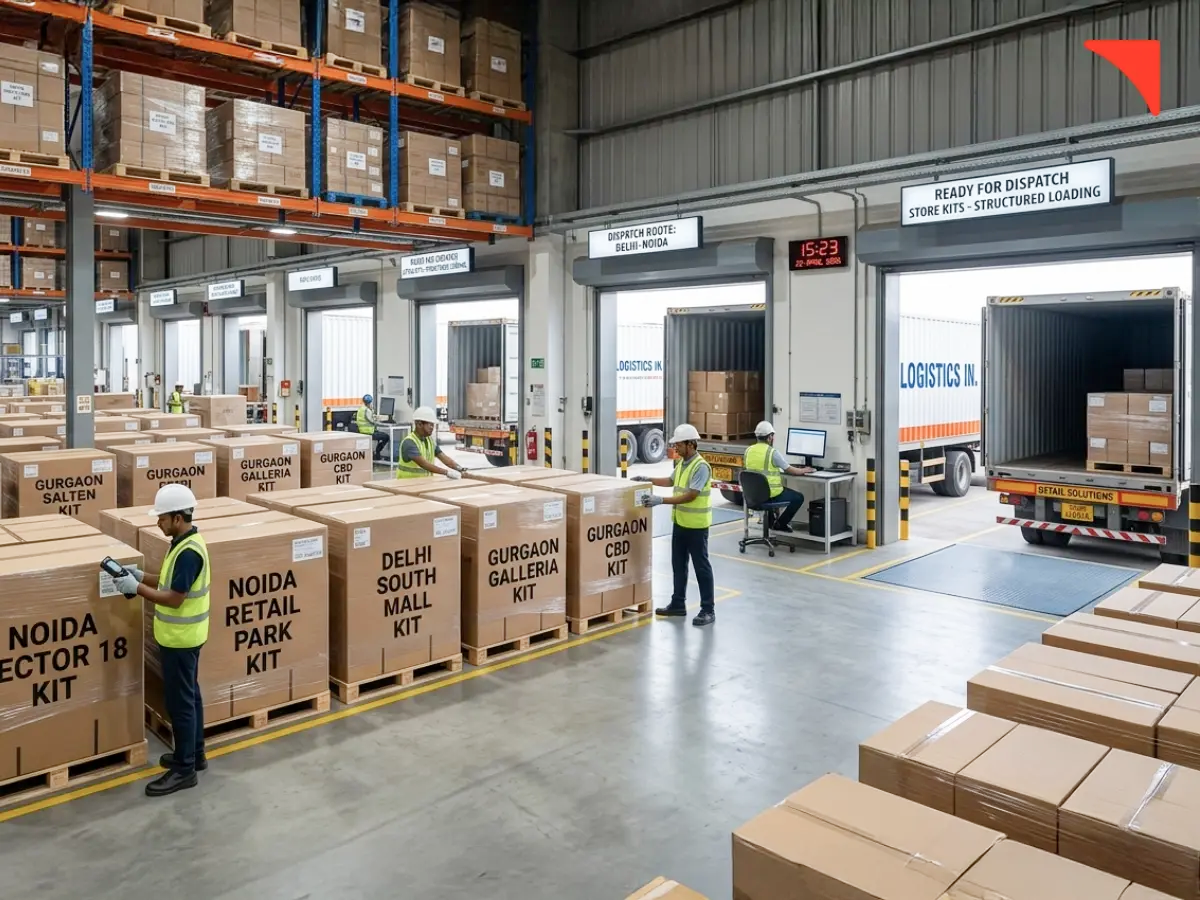
Phase 3 is all about pre-producing and stocking standardized elements across zonal warehouses. These elements are not generic inventories. Instead, they are format-mapped and size-mapped components that are perfectly aligned to store archetypes.
Deploying power stocks across different regions helps in:
In a traditional rollout model:
In a power stock model:
Considering this, recce no longer remains a design trigger, but becomes a quantification and deployment trigger.
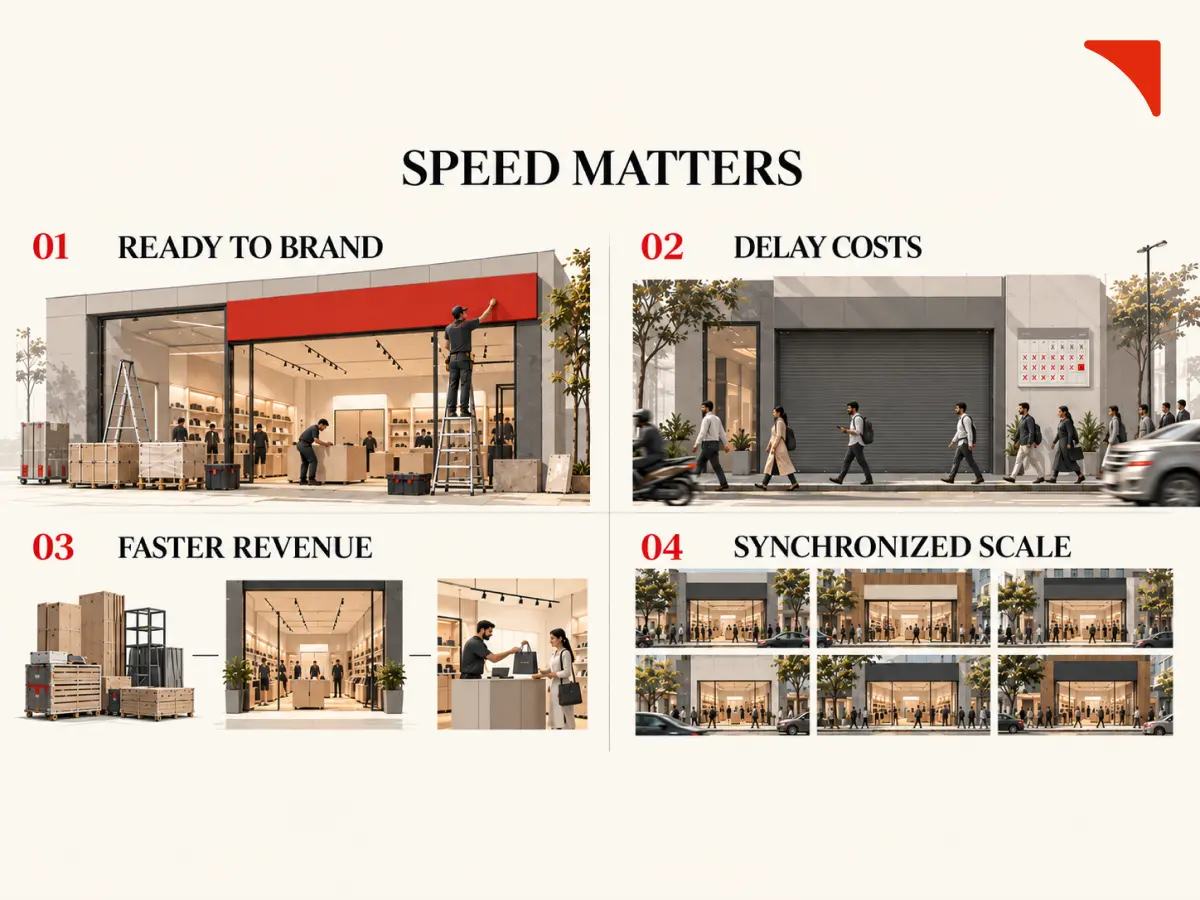
India’s retail ecosystem does not just support this model—it amplifies it.
And clearly, in an environment like this, speed is not a luxury or just operational efficiency. Instead, it’s an advantage that separates expansion from acceleration.

When brands are scaling their business, success is not measured by how well they execute. Instead, it is measured by how fast that store execution turns into revenue.
A strategically designed and implemented power stock strategy does not just improve the retail rollout efficiency. It fundamentally rewires how quickly a brand comes alive on the ground. It enables a brand to:
Because in modern retail, the brands that succeed are not the ones who expand, but the ones who monetize faster.
Execution is rarely the differentiator in the case of smaller scales. Most partners can seamlessly deliver retail stores when the numbers are limited.
But when we talk about 500, 1000, 2000, or more stores, the equation changes completely.
What seemed like a question of capability now begins to expose structural limits.
It is no longer about design excellence, vendor availability, or the size of the execution team. Instead, the real question is much deeper—is the partner structurally built for rollout at scale, or just stretched to accommodate it?
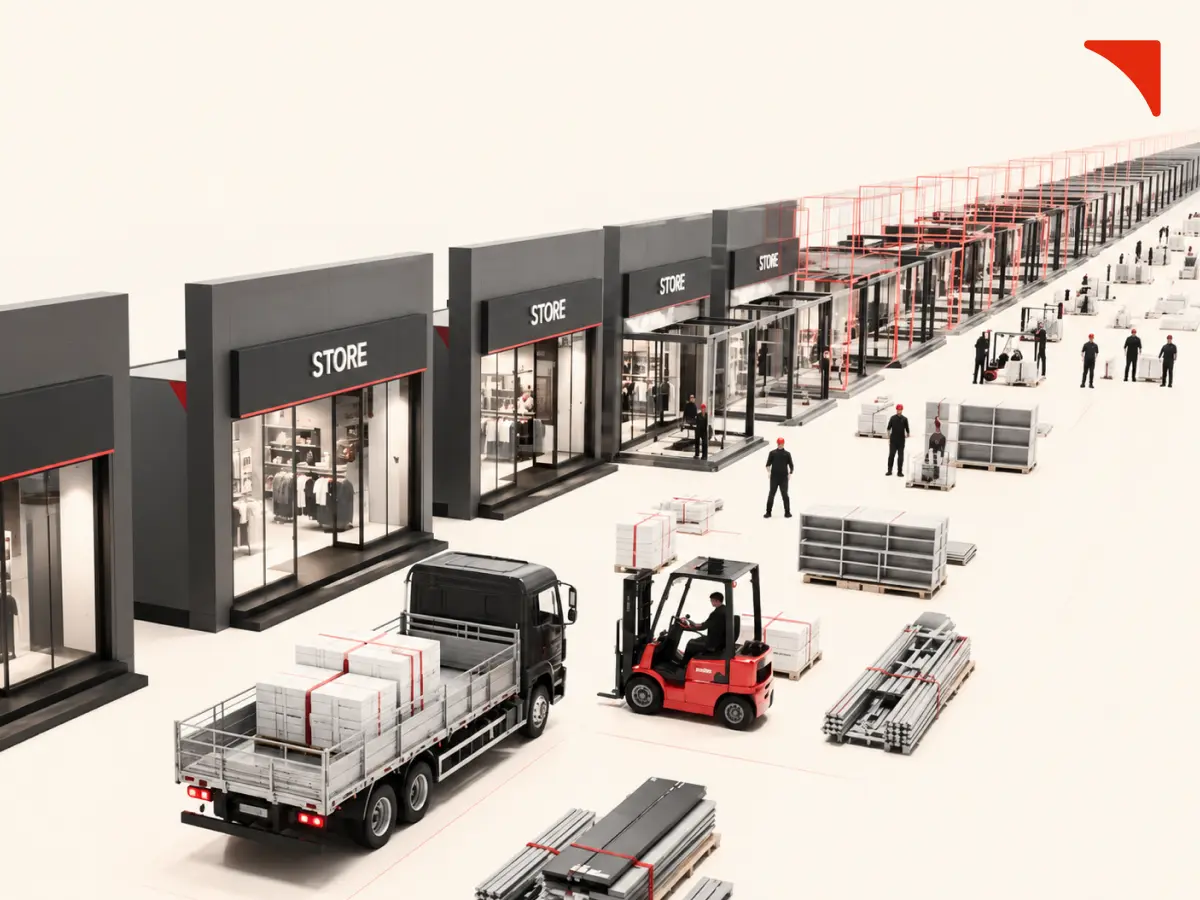
The market does not lack agencies that can design and execute retail stores. At a surface level, capability appears abundant. However, scale, on the other hand, reveals a completely different story.
There are very few partners that:
And that’s where the gap between a conventional execution partner and a rollout-ready partner becomes undeniable.

Brands that still rely on traditional rollout approaches are exposed to numerous risks. They often experience/face:
In the case of fast moving categories, higher cost is not the real risk. It’s lost momentum.
And once momentum shifts to fast moving competitors, catching up becomes significantly harder for brands than starting right.
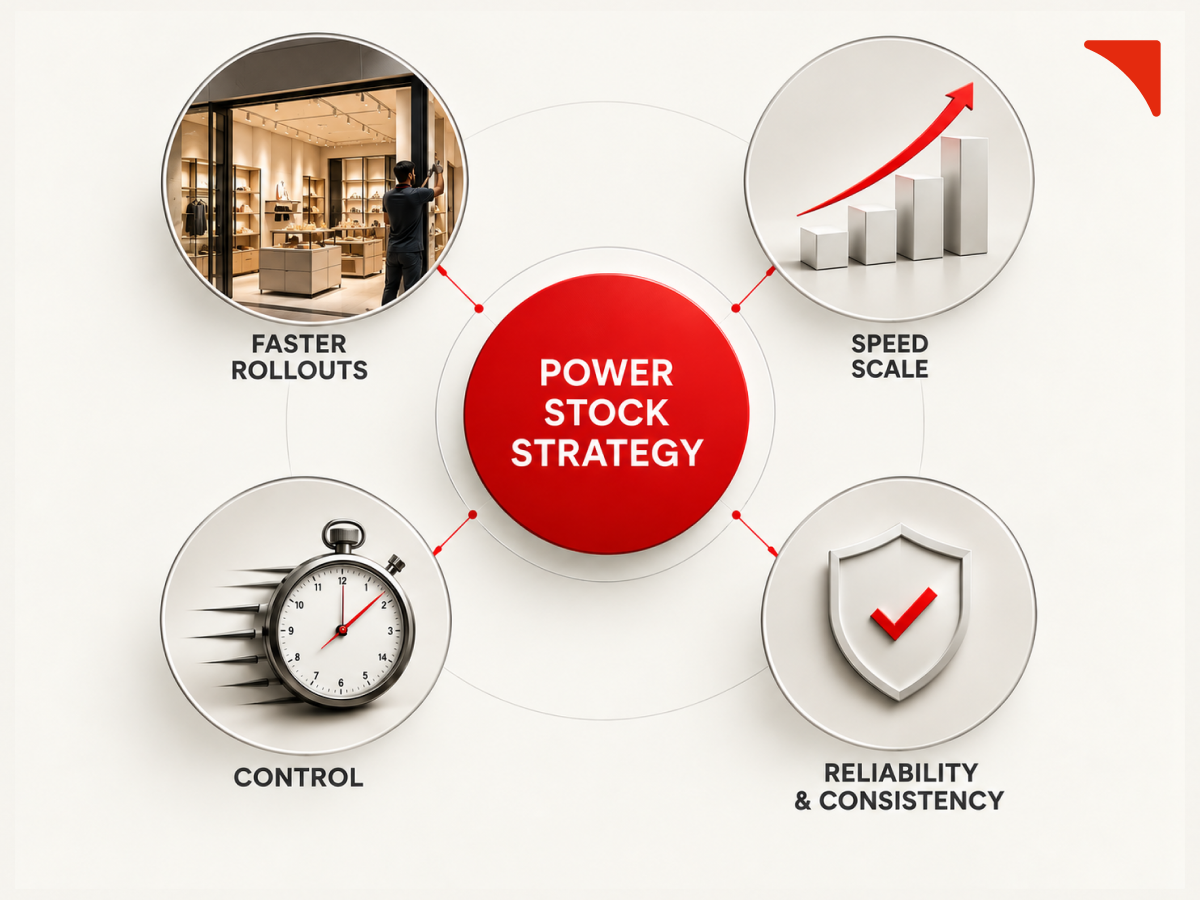
Apart from being an execution tactic, the power stock strategy is actually emerging as a clear benchmark of operational maturity. It clearly signals whether or not a brand is truly prepared for scale, and not just in intent, but in structure.
Power stock strategy reflects whether a brand is equipped to:
In other words, the power stock strategy is not just about faster rollouts. Instead, it is actually about proving that speed, scale, and control can coexist.
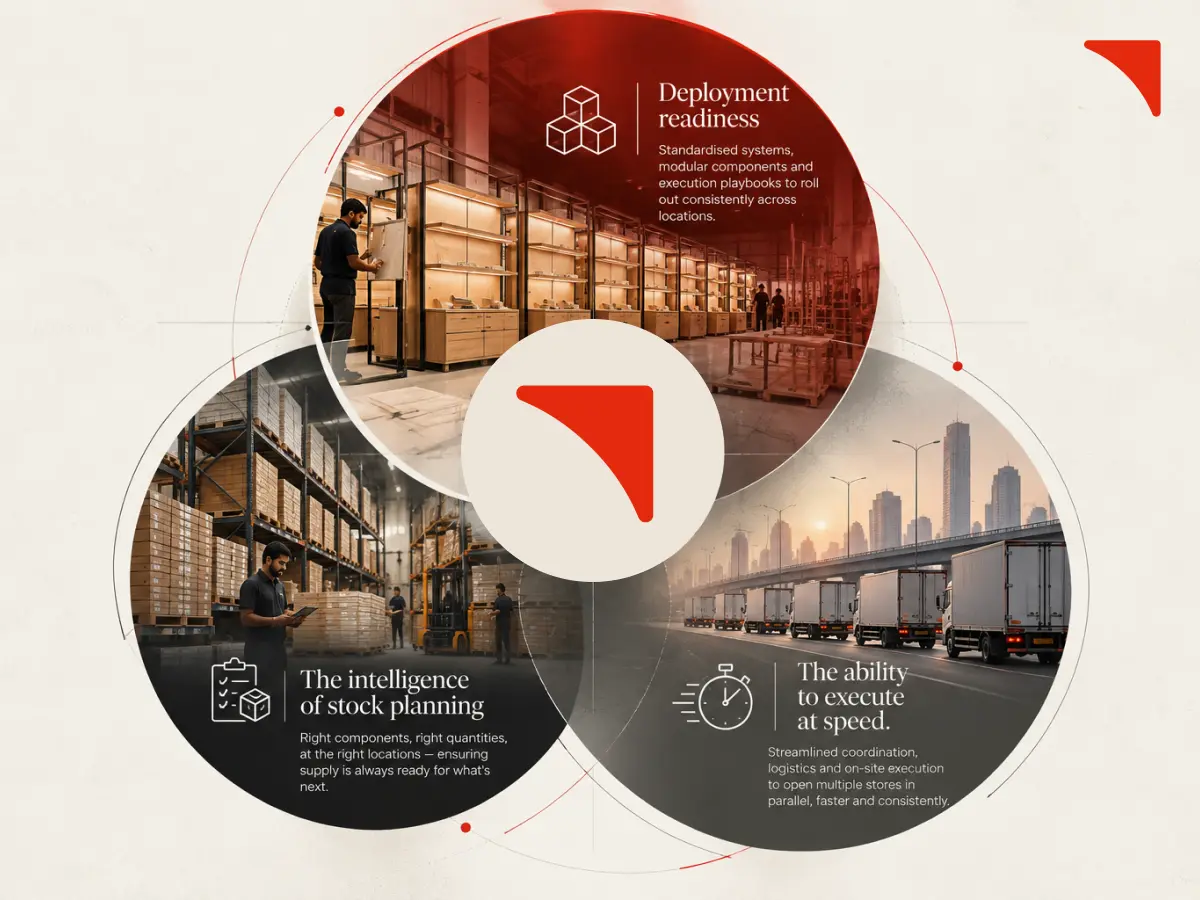
As retail expansion accelerates, brands will also make changes in the criteria for choosing partners.
Design quality and cost efficiency have traditionally been the primary filters used for evaluating partners. They will continue to remain important, but will no longer define leadership. Modern brands will shift their focus towards deeper and more structural capabilities, including:
This shift is extremely important because in a field that's driven by rapid scale, the real differentiator is not how well an agency can design a store. Instead, it’s how fast, consistently, and predictably a partner can bring hundreds of retail outlets to life. And this right here will be defining the benchmark in retail expansion.
Retail expansion today is not just limited by opportunity. Instead, it is constrained by execution speed and system readiness.
Brands that just plan better will not be the ones who lead. But brands that deploy faster, more consistently, and at scale will become the successful ones.
In a field where time is equal to revenue, speed is not just an advantage, but a multiplier. And this is exactly what is transforming the role of a retail rollout agency. It now acts as a critical partner for growth—one that determines how quickly strategy is converted into reality.