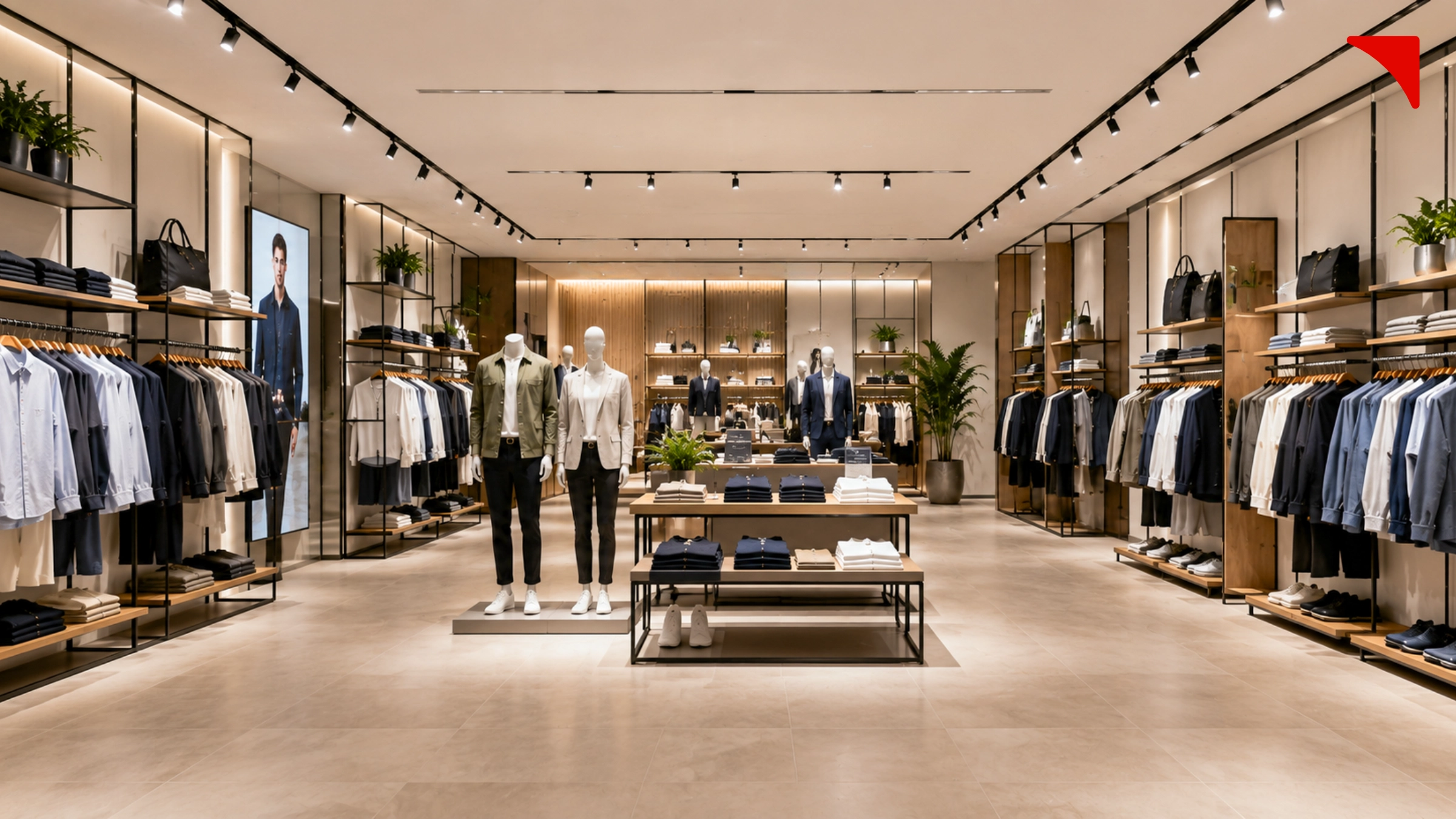
Launching a single retail outlet is not a very challenging task. But opening 1,000 stores while ensuring that each space reflects the same brand identity, execution quality, and speed, is actually where the real challenge begins.
Even in 2026, various brands still assume that scaling execution is all about increasing manpower, connecting to more vendors, and allocating larger budgets. However, the reality is completely different. Large scale retail expansion is actually a systems problem. Brands that are able to successfully expand across hundreds or thousands of physical locations at a single time do not just rely on effort. Instead, they rely on standardization and centralization.
Standardization refers to the process of creating repeatable systems, designs, materials, and store execution methods that can be seamlessly replicated across multiple locations. It is a hidden foundation that ensures the success of a rapid retail rollout.
Why Scale Creates Complexity
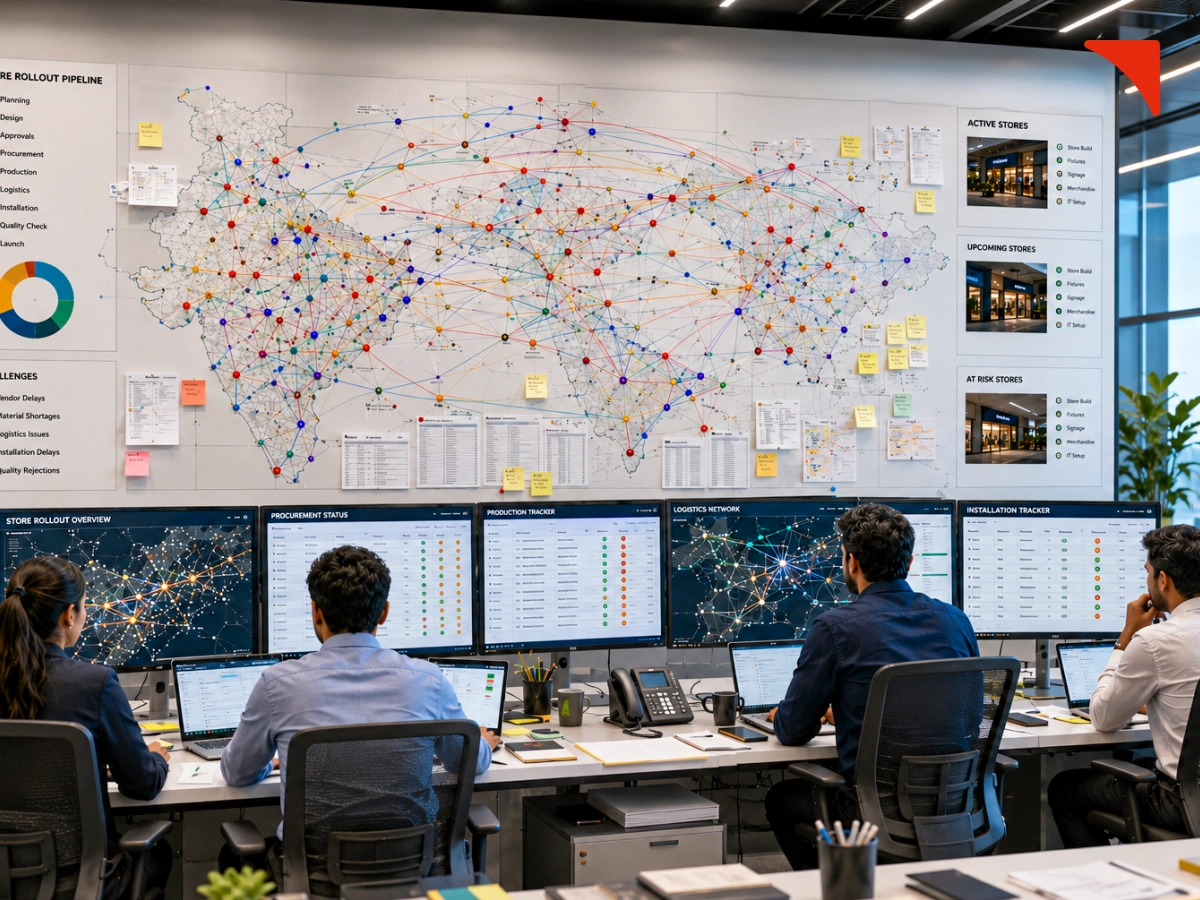
Every retail brand that expanded its physical network has simultaneously noticed an increase in the operational complexity as well.
It is not a very easy but still a manageable task for a retail brand to oversee different layouts, fixture designs, and execution models when operating across 50 different locations. However, this automatically gets converted into a major operational challenge as soon as the store number reaches 500, 1000, or even more.
According to industry research, it has been noticed that when retail brands standardize their store execution projects, it helps in reducing the overall completion and delivery timelines by up to 30 to 40%. In addition, standardization and centralization also help in improving consistency across locations.
This data clearly highlights a simple fact: As the store count keeps on increasing, the level of operational complexity will simultaneously grow much faster than the number of stores themselves.
The Four Pillars of Retail Standardization
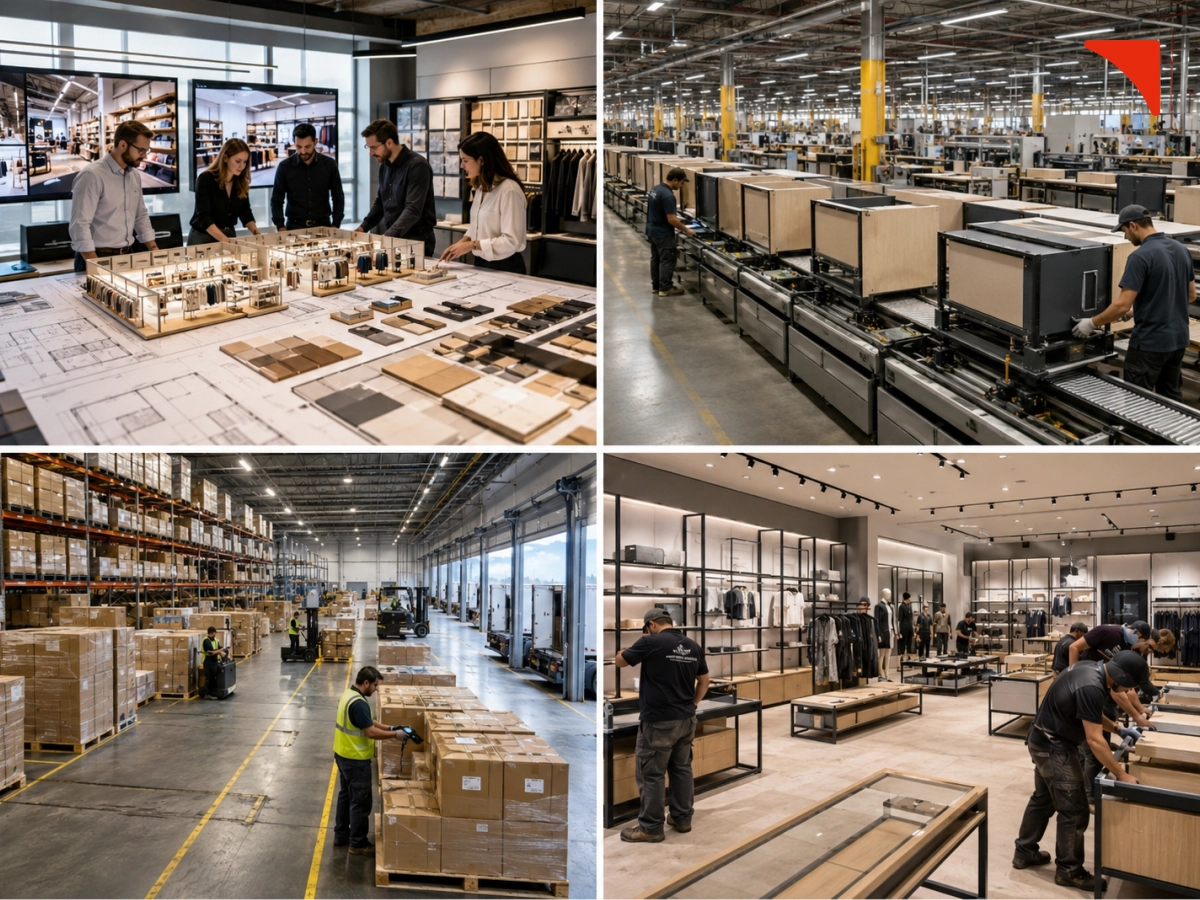
In order to experience successful retail execution, it is extremely important for brands to get through these four key layers of standardization.
The process of standardizing a design includes creating finalized store formats, layouts, fixtures, displays, and other branding guidelines that can be seamlessly adapted and executed at different stores, irrespective of their size, location, and format. As a result, retailers can directly eliminate the hassle of making new designs every time they decide to launch a new store. This will help them scale fast, reduce expenses, and ensure consistency.
For example, many large retail chains, like Reliance Fashion and Trends, carry out their retail operations with 70 to 80% standardized design elements. The remaining 20 to 30% are facilitated through local adaptations. This approach helps them maintain a consistent customer experience and also reduces design and approval cycles at the same time.
Once all the in-store elements have been standardized, the process of manufacturing becomes more effective and efficient. Retailers can practice economies of scale and produce fixtures, display units, shelves, signage systems, and other retail branding elements in a larger volume. This will automatically help them reduce costs and lead times as well.
According to a research conducted by Forbes, it was found that standardizing the production procedures helps retail brands improve their overall efficiency by 20 to 25% in comparison to opting for highly customized products for every new touchpoint.
This can be ignored in case a single store is being launched, but it becomes extremely important when brands are executing hundreds or thousands of stores simultaneously.
When we talk about large scale retail store execution, logistics and transportation are the two most common as well as major bottlenecks. When brands do not practice standardization, they need to hire multiple vendors for getting different things done, including planning, packaging, transportation, and installation schedules, for every individual physical space.
On the other hand, if brands opt for turnkey project execution and simply consider standardizing components, it automatically simplifies the entire logistics and transportation procedure by letting them practice regional stocking strategies and calculate predictable deployment timelines. This further helps in reducing delays and also improves coordination between teams based across different regions.
We will have to agree with the fact that even the best designs and materials can fail if installation procedures are not carried out in a consistent manner across different locations. In order to avoid this from happening, retail brands can simply consider hiring a reputable agency like D’Art Private Limited that provides integrated retail solutions under one roof. Professionals can help standardize installations by developing well defined manuals, checklists, and execution protocols. This will further help the commercial organization ensure that each and every store follows and matches the same quality benchmark.
This aspect of consistency cannot be ignored by brands, especially in cases where they are operating across multiple cities, states, and geographies, and different execution teams are handling the work.
The Business Impact of Standardization
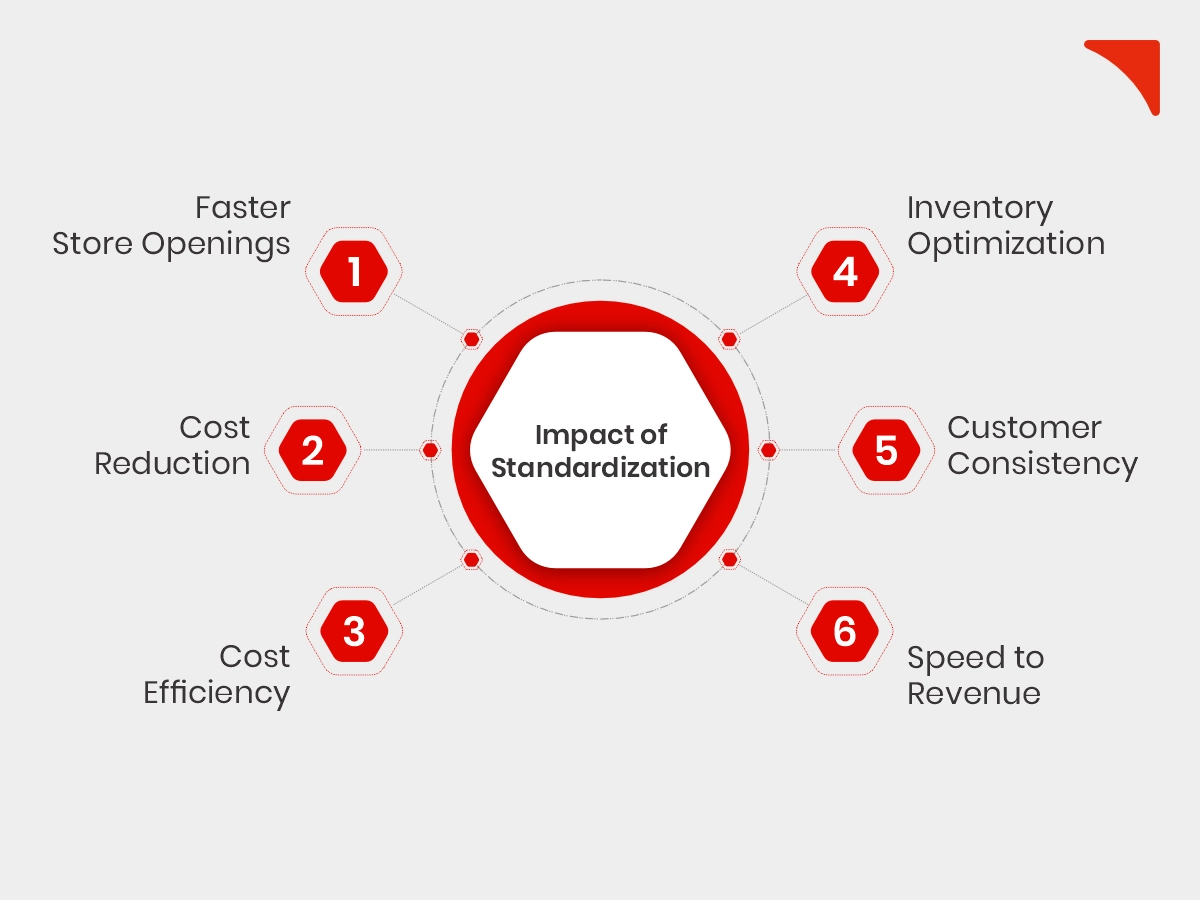
Operational convenience is not the only benefit of standardizing a retail store execution. Instead, it offers numerous other advantages.
According to a study by McKinsey, it was found that retail organizations that usually consider standardizing their retail operations often achieve higher operational efficiency in comparison to those who opt for fragmented execution models.
In the field of retail, standardizing a project can usually result in:
Standardization and the Future of Retail Expansion
A long time back, market demand alone determined retail growth. However, as things are constantly changing and new technologies are being introduced regularly, this is no longer the case. In fact, the capacity of execution today actually determines how quickly a brand can expand.
As the retail market becomes more and more competitive, retail brands are under constant pressure to activate stores faster, that too, while ensuring that each and every touchpoint reflects a consistent identity, values, storytelling, and experience. Well, this is exactly what is driving the shift from project based execution and instead pushing organizations to opt for execution that is deployment based.
This makes it clear why successful retail brands are increasingly investing in standardized fixtures, modular store formats, regional inventory planning, and technology driven execution tracking. These systems don’t just help in successful retail expansion but also convert this reactive process into a predictable growth engine.
Considering these scenarios and the present situation, turnkey project execution should also evolve from a service model and get converted into a strategic growth enabler that can help brands scale fast and scale right, that too, without compromising on quality and staying within the decided budget.