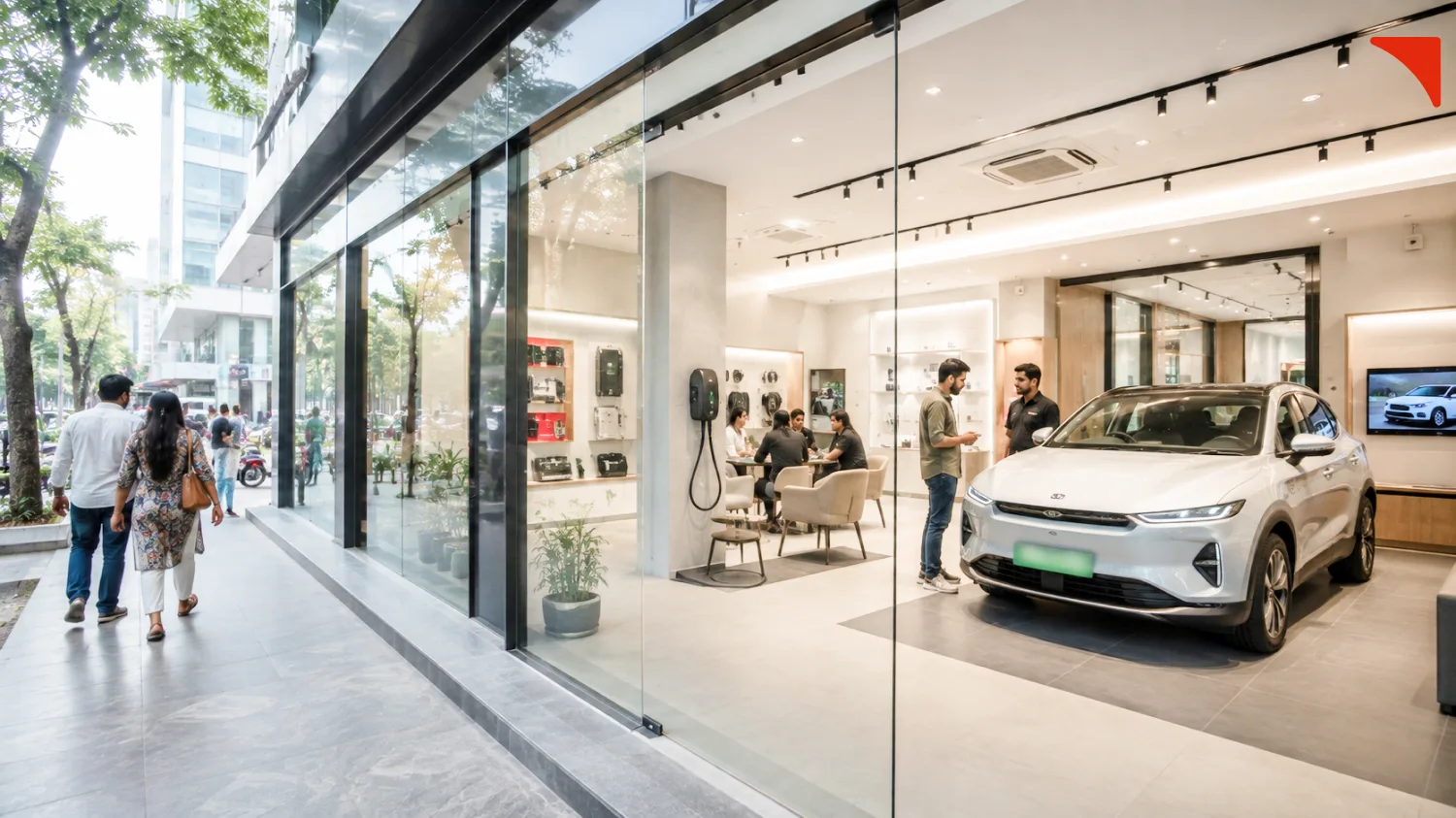
When discussing about the EV industry, the main conversation often revolves around the lens of batteries, charging infrastructure, and government incentives. However, there is one competitive advantage that is quietly taking shape on the ground level: physical retail.
As the concept of electric mobility constantly shifts from early adopters to mainstream consumers, modern brands have started realizing that market acquisition or winning the market share is not just about launching better vehicles. Instead, it is actually about creating and setting up spaces that allow customers to understand, trust, and experience the new launches.
Getting an EV is not like any other conventional purchase. Consumers do not just compare horsepower or design. Instead, they actually look for answers related to charging, battery life, software updates, servicing, resale value, and TCO (total cost of ownership). These questions cannot always be resolved through an online configurator, but truly require immersive, educational retail environments.
This is exactly why India’s next phase of EV growth is expected to be driven by experience centers as much as it is driven by engineering.
India's EV market is entering its expansion phase!
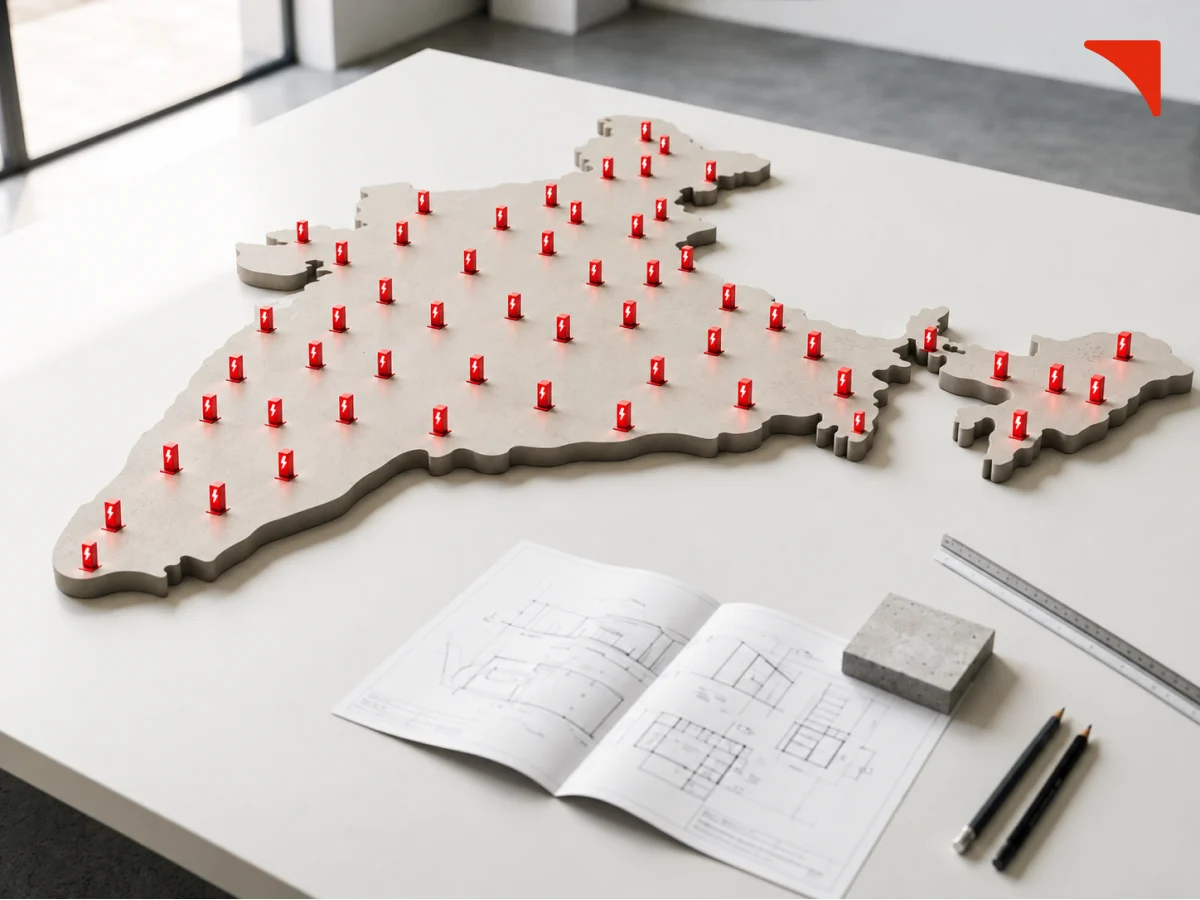
The Indian EV ecosystem has now moved beyond experimentation.
According to a survey conducted by the Indian Energy Storage Alliance (IESA), it was found that India recorded approximately 2.3 million electric vehicle sales in the year 2025. These sales accounted for nearly 8% of all new vehicle registrations. The main reasons that assisted in achieving this milestone were policy support, increasing model availability, and rising consumer confidence.
Apart from this, the dealer body FADA (Federation of Automobile Dealers Association) further reported that while electric passenger vehicle sales grew by an impressive 77%, there was a year on year increase of 16.37% in the overall electric vehicle sales conducted in 2025. This data clearly highlights that adoption is accelerating beyond the two wheeler segment.
For EV brands, this growth does not just present a demand generation challenge, but one related to network expansion. Hence, they should no longer ask this question: Should we open or set up experience centers? Instead, they should now be asking: How can we scale our experience centers and retail touchpoints while maintaining speed, consistency, quality, and a seamless customer experience?
Why experience centers have become strategic assets!
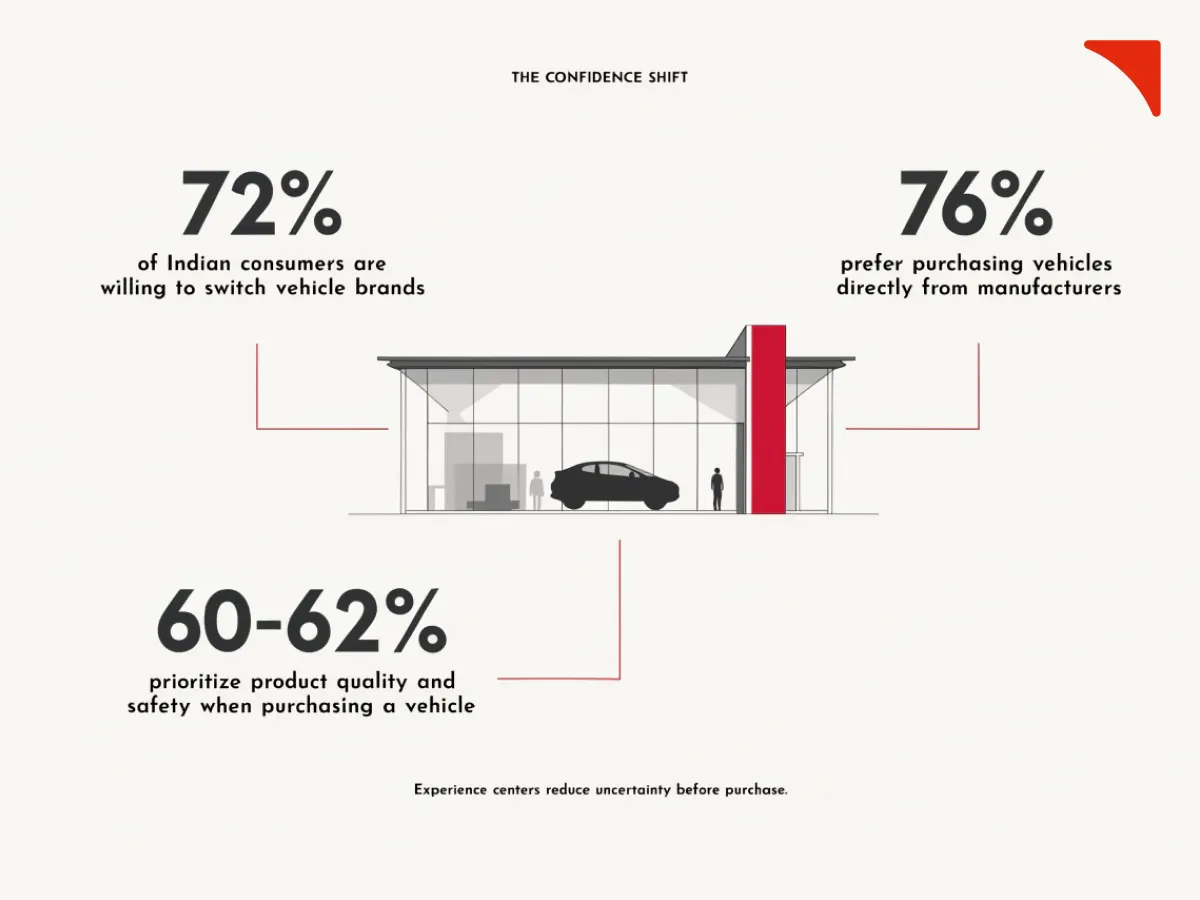
Traditional automotive dealerships were solely designed to display vehicles. However, this has completely changed now. Modern EV experience centers are specifically designed to reduce uncertainty.
According to Deloitte’s 2025 Global Automotive Consumer Study, various considerations clearly revealed why this distinction matters. The study found that:
These numbers and data are more than enough to highlight the fact that brand loyalty is becoming more fluid in the automobile industry. In case they get a confident and immersive buying experience, customers will not hesitate to explore new entrants.
Leading brands like Ather Energy recognized this early and hence started developing interactive experience centers that went beyond merely showcasing products and instead allowed customers to practically explore charging ecosystems, software capabilities, and test rides.
In a similar manner, global brands like Tesla have completely revolutionized automotive retail. Instead of treating traditional stores as a dealership space to facilitate sales and purchase, they consider them as technology showrooms. This is one of the most significant philosophies that many Indian EV companies have now started considering and adapting.
Automotive Store Expansion is no longer about opening more stores!
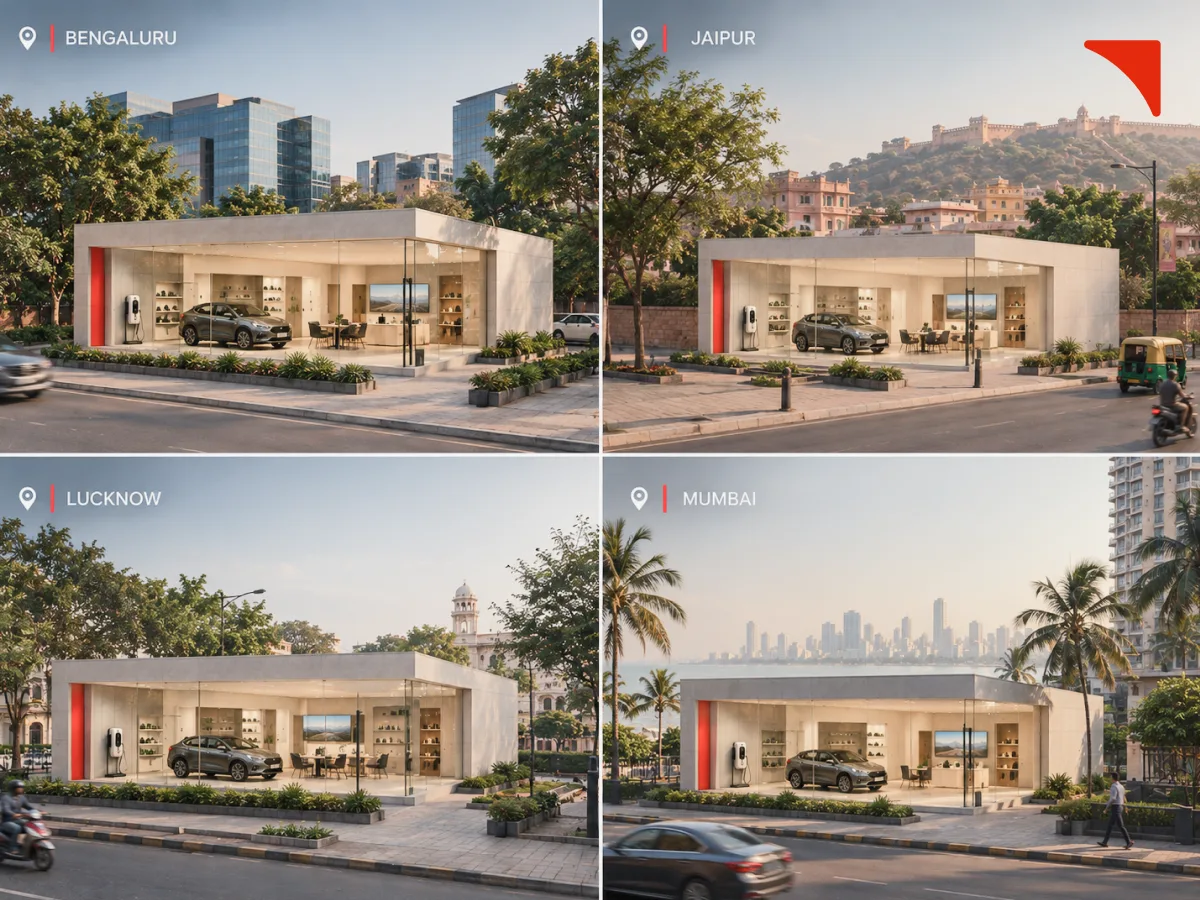
When automobile brands expand rapidly without ensuring consistency, it creates fragmented customer experiences.
When a customer who is planning to purchase an electric vehicle walks into a flagship center in Bengaluru, he or she should receive the exact same brand confidence as someone who is visiting a compact store in Jaipur or Lucknow.
Well, this is not as easy as it seems to be because this is not all about achieving perfect architectural drawings. Instead, it actually requires standardized EV experience center design and execution. Brands need to establish an integrated process where layouts, fixtures, customer journeys, digital integrations, and operational workflows align with each other and are perfectly engineered to scale.
Apple Inc. was the first brand to perfect this model. Leading EV companies have now started replicating it in mobility.
The biggest challenge isn't finding locations; it's replicating trust!
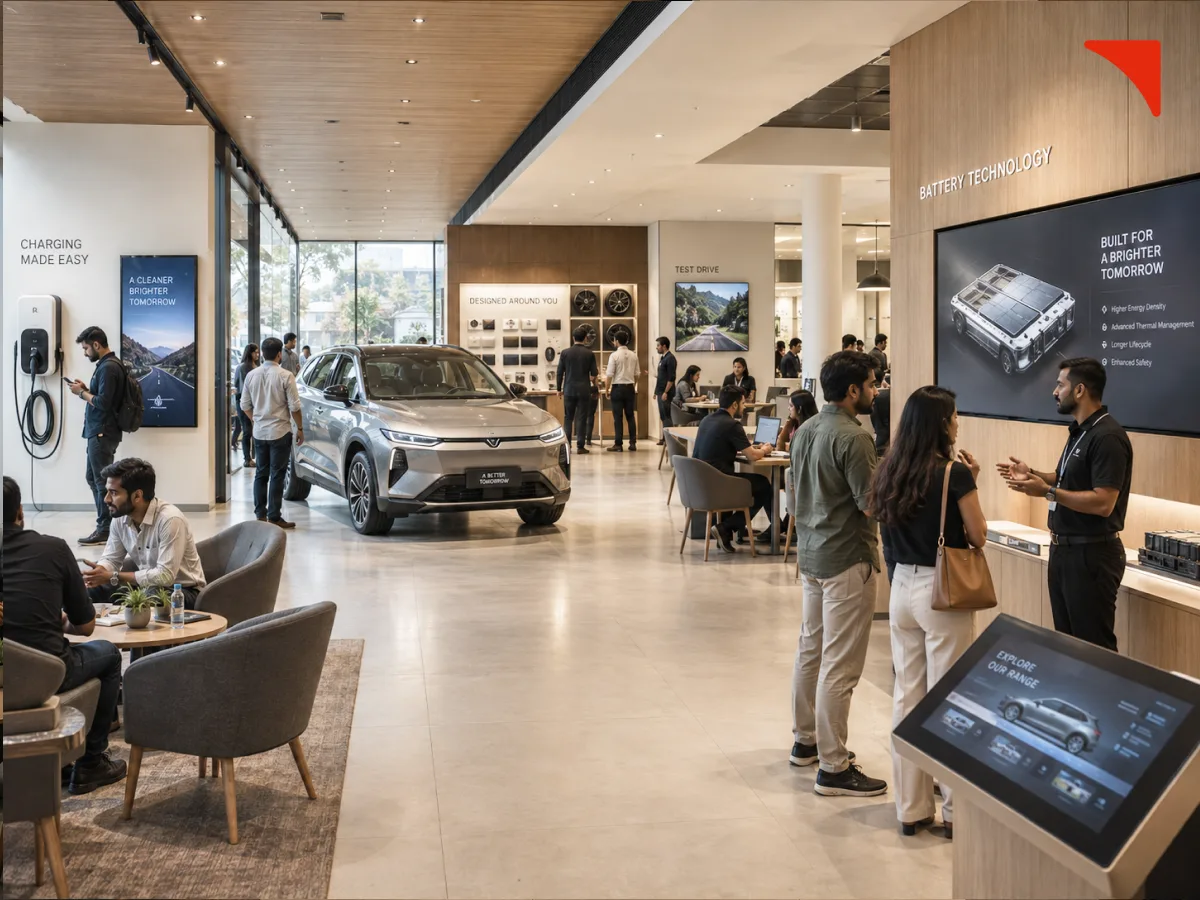
Unlike traditional retail shops, modern EV experience center designs should actually be developed in a way that educates their customers before they sell a product. There are various questions that shoppers usually arrive with. Hence, brands should utilize every touchpoint within the store to answer those doubts and queries. This automatically makes customer journey design as important as vehicle display.
And as experience itself is getting converted into a sales tool, elements like interactive charging demonstrations, battery information walls, digital product configurators, consultation lounges, and guided test drive experiences are increasingly becoming essential components of modern EV retail.
Expansion without consistency weakens the brand!
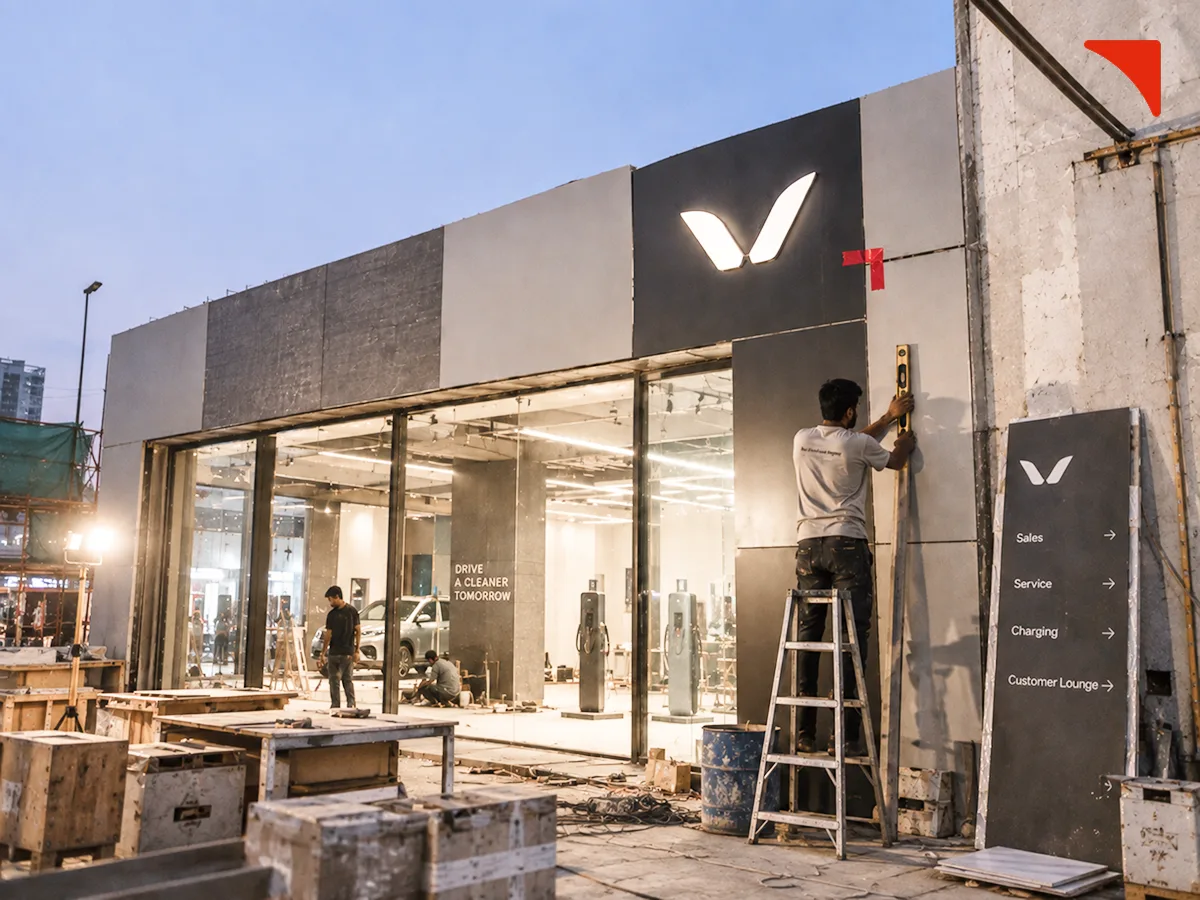
Brands that wish to grow fast often end up underestimating the operational complexity of retail expansion.
Launching ten stores at different locations is still a manageable task. However, when this number increases to 100 or more, the respective process starts introducing entirely different challenges. A few common ones include dealing with local or regional contractors, variability in construction quality, delayed project timelines, inconsistent fixtures, uneven customer experiences, and brand dilution.
In order to avoid these challenges, it is important for automotive organizations to opt for standardized retail shop branding. It is not just a visual exercise, but actually an effective business strategy that ensures everything, including exterior identity, navigation and wayfinding elements, digital screens, visual merchandising displays, and fixtures, is aligned with each other and perfectly communicates a unified brand language.
Because in today’s competitive scenario, it is important to ensure that shoppers recognize the experience of a brand before recognizing its logo.
Infrastructure gaps make retail education even more important!
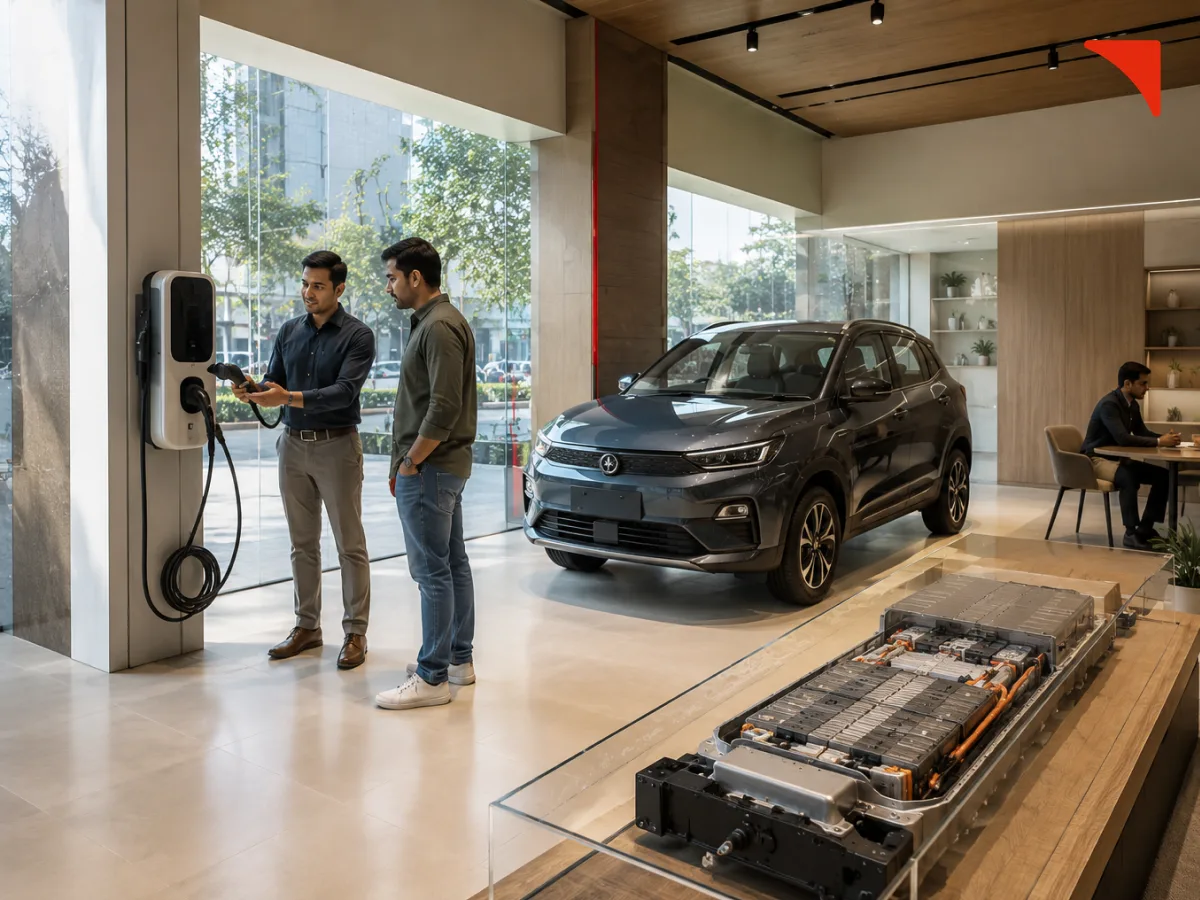
India's charging ecosystem continues to improve, but something that isn’t evidently improving is consumer concerns.
According to a survey conducted by Deloitte, it was found that:
On the other hand, a study conducted by Business Standard highlighted the fact that the public charging network has rapidly expanded in India. It massively increased from around 5,000 stations in 2022 to over 29,000 by 2025. But irrespective of this fact, charger reliability and accessibility continue to heavily influence overall EV buying decisions in our country.
These concerns cannot be solved by just retail shop branding initiatives, marketing activities, or advertising campaigns. Instead, they actually require dedicated physical spaces that allow customers to seamlessly experience changing technologies, have one on one communication with experts, and build their confidence before making a high value purchase.
This will help brands move beyond increasing sales and instead focus on making the potential consumers confident by reducing their purchase anxiety.
Retail expansion needs strategic thinking and not just execution!
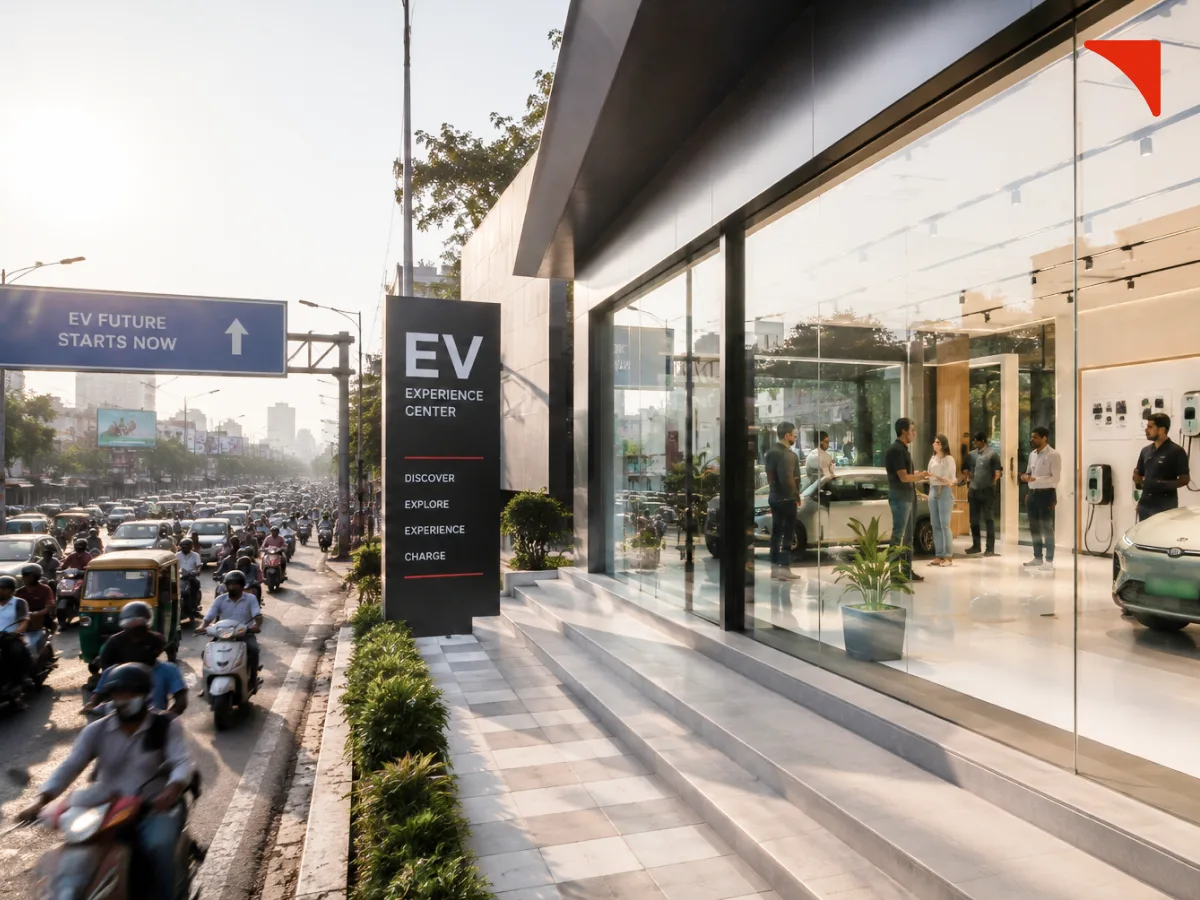
As electric vehicle companies expand into Tier 2 and Tier 3 cities, they need to strategically make and execute retail decisions. It is important for them to understand that they cannot establish a flagship store or experience center across every location.
Some cities are perfect for setting up compact discovery studios that can be located inside premium malls. On the other hand, some areas might specifically demand a larger and immersive experience center design that integrates charging demonstrations, delivery bays, and service inclusion.
However, achieving this is not as simple as it looks like. In order to make informed and aligned decisions, EV brands need to possess a deep understanding of customer demographics, real estate economics, operational scalability, and future growth. Well, this is exactly why it is suggested to partner with a reliable brand design consultancy like D’Art. They will not just contribute to aesthetics but will instead help in translating business expansion objectives into scalable retail ecosystems that are flexible and can easily adapt to the changing technologies and customer expectations.