Patanjali
CLIENT
Patanjali
INDUSTRY
Conglomerate
SERVICES
CLIENT
Patanjali
INDUSTRY
Conglomerate
SERVICES
Patanjali is a renowned Indian brand that operates within the FMCG (fast moving consumer goods) and wellness sector. The brand is built on consumer trust and affordability and has a deep connection with Indian traditions. Patanjali has a huge product portfolio that includes food items, personal care, wellness products, etc. The brand has experimented with different conventional retail formats and has presently established itself in urban and semi urban markets.
Patanjali had a clear objective: increase accessibility, improve product visibility, and build deeper engagement with consumers. And this is exactly where D’Art entered the picture.
It was not at all easy for Patanjali to expand into rural and semi urban areas within India. The brand was presented with a completely unique set of challenges that could not be addressed through conventional/traditional retail strategies, as it faced several limitations that further restricted its speed, scalability, and reach.
The above challenges are more than enough to explain that in order to unlock growth in these high potential markets, it was extremely crucial for the FMCG brand to opt for a strategic solution that could be deployed immediately, is cost efficient, scalable, and capable of bringing the brand directly to the consumer.
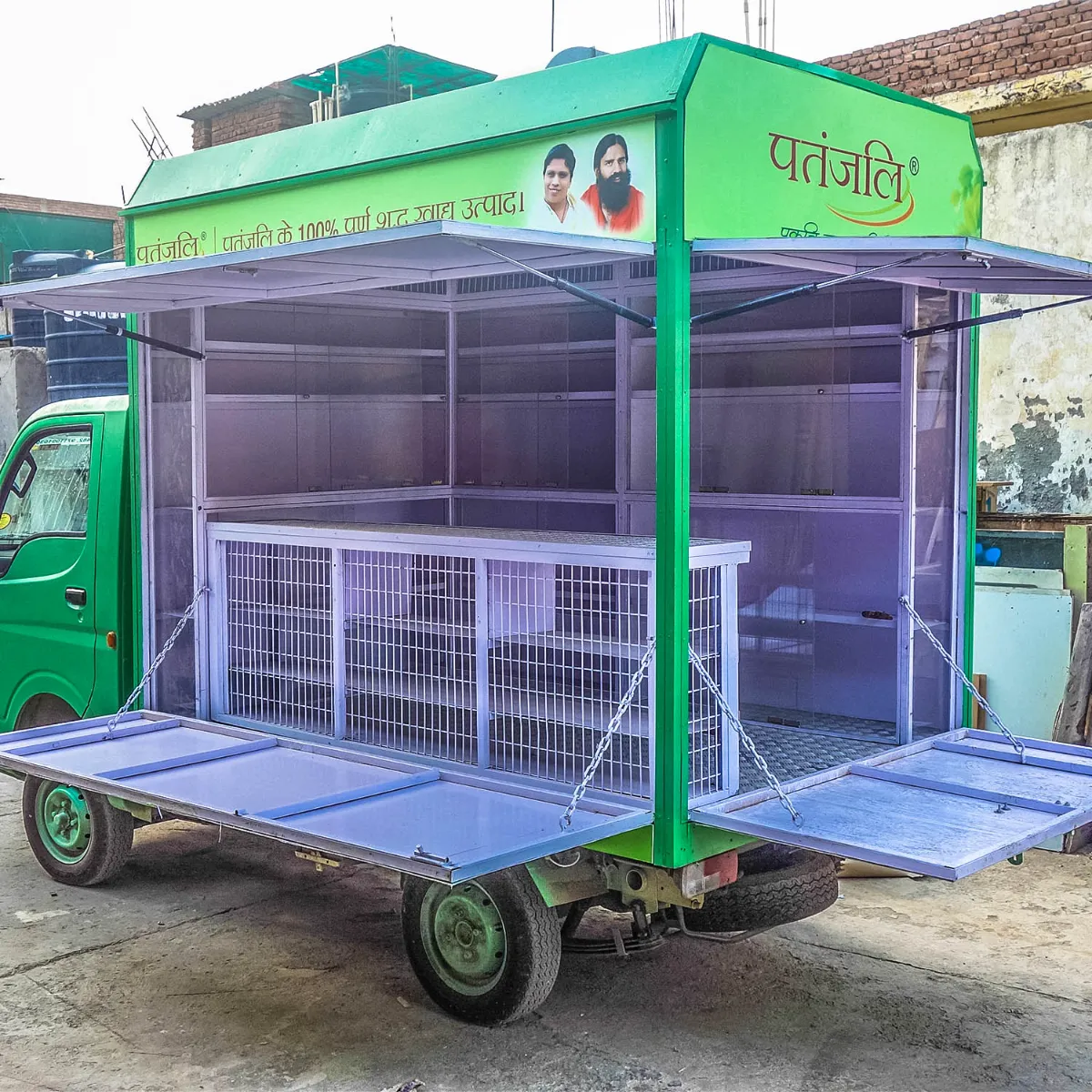
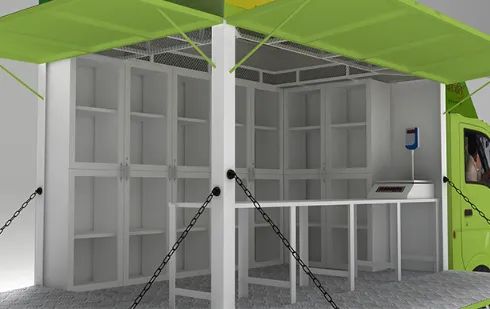
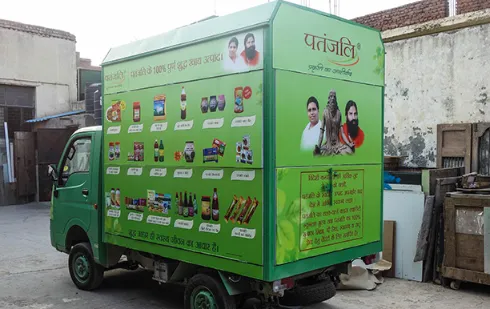
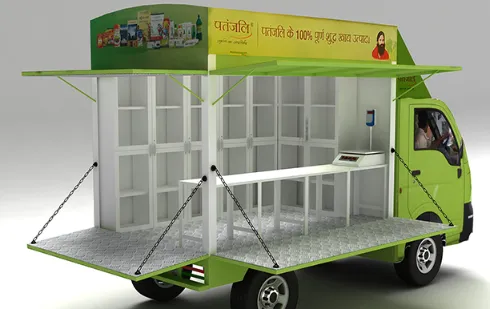
In order to help Patanjali overcome these challenges, D’Art decided to introduce a new retail format: “Store on Wheels”. We had a core idea behind introducing this format: instead of expecting the customer to come to the store, we wanted to bring the store to the customer. The team at D’Art engineered light commercial vehicles into fully functional mobile retail units that were strategically designed to operate as compact and self contained mini stores. The team made sure that these strategic vehicles acted as more than transportation units. This helped Patanjali achieve a unique purpose built retail environment that was capable of showcasing a wide product range while efficiently operating in the most dynamic rural conditions.
The entire architecture of the commercial vehicle was designed in a way that ensured ease of operation and high visibility. The side panels had a flip open feature that allowed the driver/retailer to immediately transform the van into walk up retail counters and enabled them to quickly set up in high footfall areas.
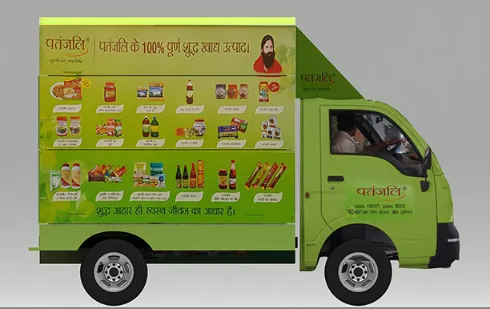
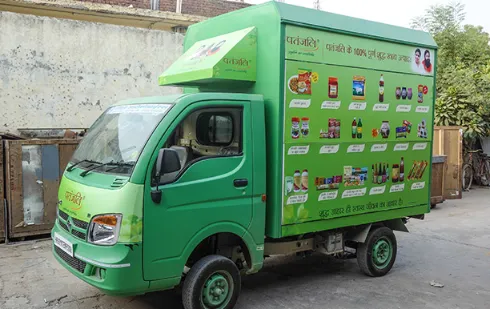
The brand's overall retail presence was paid utmost attention to. All the mobile stores were wrapped in Patanjali’s iconic green visual language. This also turned the vehicle into a moving billboard. Strategic design and precise execution highlighted some of the main factors that are responsible for building consumer confidence in rural and semi urban regions: familiarity, reliability, and value.
The shop on wheels initiative was a complete hit as it successfully transformed the FMCG brand’s rural expansion strategy and delivered clearly measurable business.
By redefining last mile access, the mobile shop design and execution allowed Patanjali to reach consumers faster, respond to regional needs, and build deeper brand relationships in previously underserved markets.
The Showroom on Wheels initiative for Patanjali by D’Art went way beyond being a mobile retail solution. Instead, it became a strategic growth tool that completely redefined the brand’s rural business model. By combining smart engineering and strong branding with customer centric design, this respective initiative helped Patanjali overcome traditional retail barriers and unlock new opportunities for scale, speed, and impact.
The project clearly highlights the fact that innovative retail thinking and execution can allow brands to reach new audiences, strengthen trust, and establish a sustainable model for growth.